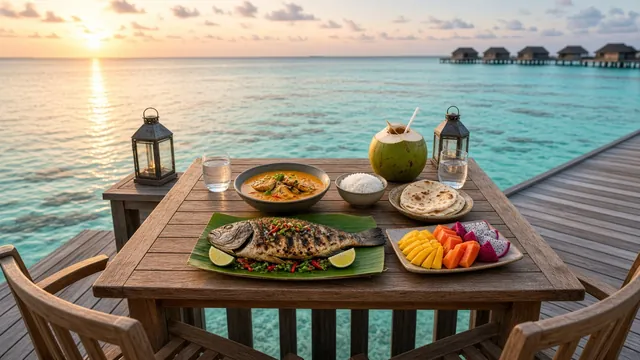
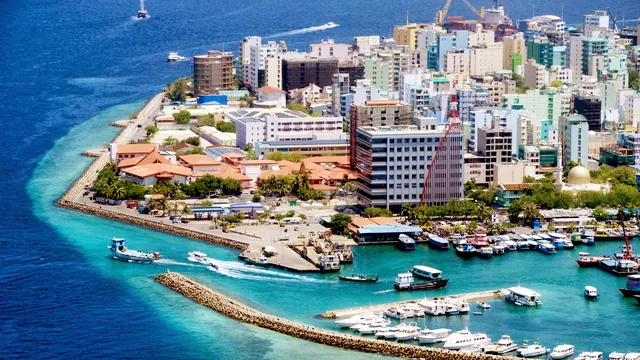
Most guests come to the Maldives for the lagoons, but many leave talking about the food. Maldivian cooking is simple, honest and full of flavour, built on what the ocean and the coconut palm have always provided. It is the food of fishing families, shared at home, at the teashop and at celebrations. This guide introduces the dishes Maldivians eat every day, the customs around the table, and the easiest ways to taste them during your holiday.
The heart of the Maldivian kitchen
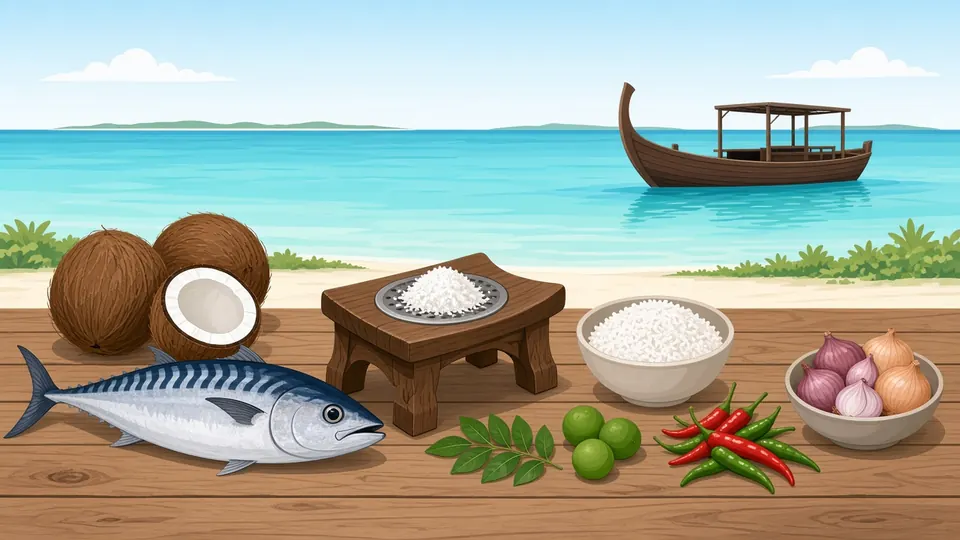
Four ingredients appear in almost everything: tuna, coconut, rice and chilli.
- Tuna (mas) is the pride of the islands. Skipjack and yellowfin tuna are traditionally caught by pole and line, one fish at a time. Tuna is eaten fresh, boiled, smoked, dried, or cooked down into a paste. In Dhivehi, the word mas means fish, and on its own it usually means tuna.
- Coconut (kaashi) is used at every stage of its life, from the sweet sap of the flower to young drinking coconuts and the mature nut that is grated or pressed into coconut milk.
- Rice (bai) is the everyday base for lunch and dinner.
- Roshi, a thin round flatbread similar to a chapati, is eaten with almost every meal and is perfect for scooping.
- Chilli, onion and lime add heat and freshness. Maldivian food can be spicy, but the heat usually comes from fresh chilli served on the side, so you can add as much or as little as you like.
The cuisine also carries gentle influences from Sri Lanka, South India and the Arab world, a reminder of the trade routes that passed through the islands for centuries.
Preserving the catch

Before refrigeration, Maldivians found clever ways to keep tuna for months. Fish was boiled, smoked over a wood fire and then dried in the sun until it became hard, a product known as Maldive fish (valhoamas when smoked). Dried fish is still grated into mas huni, curries and short eats today, adding a deep, smoky flavour. Rihaakuru, described below, is another way of keeping the goodness of the catch.
Breakfast: mas huni and roshi
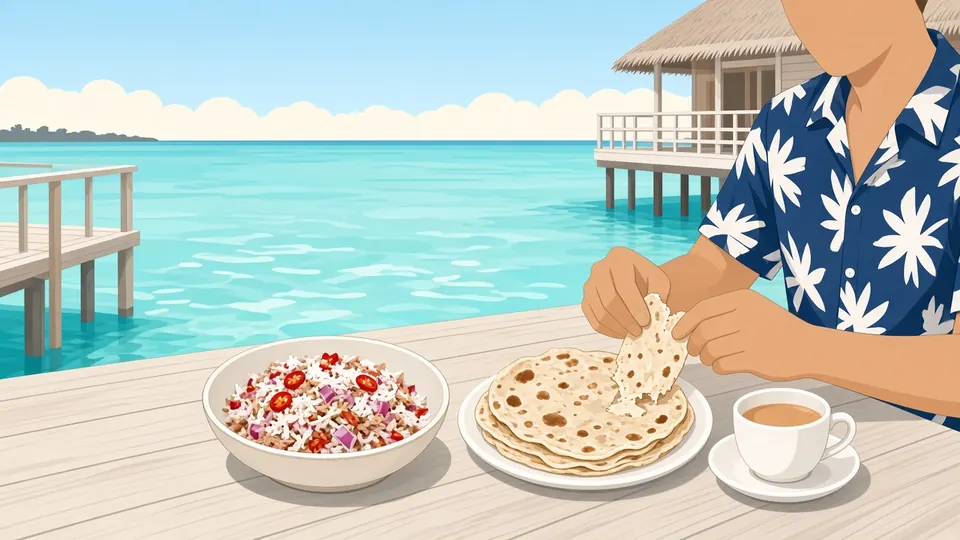
The classic Maldivian breakfast is mas huni: tuna mixed by hand with freshly grated coconut, finely chopped onion, chilli and a squeeze of lime. The name simply means "fish and coconut". To make it, the tuna is flaked and rubbed together with the coconut and onion by hand, so the coconut soaks up the flavour. It is served at room temperature with warm roshi and a cup of sweet black tea. It is light, fresh and surprisingly addictive, and many guests ask for it again the next morning.
Garudhiya, rihaakuru and curries
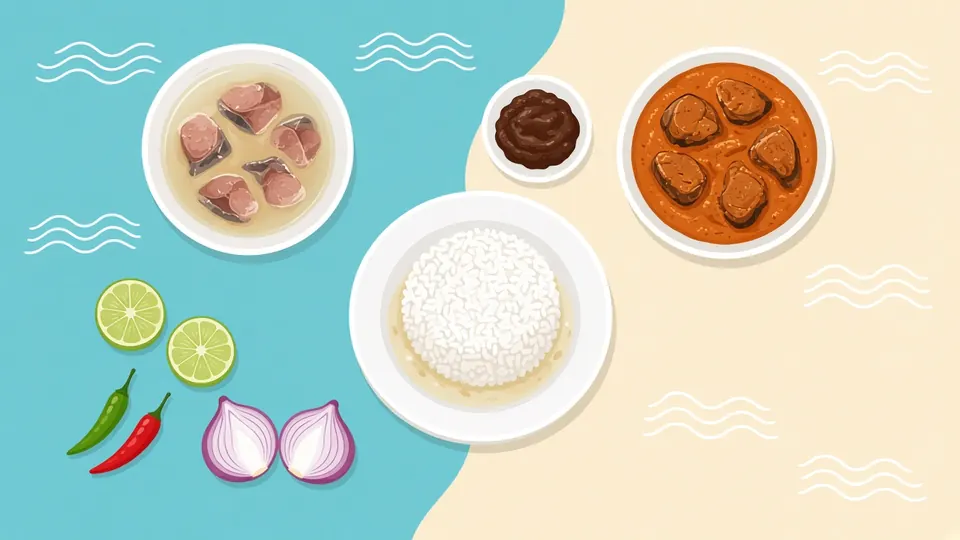
Garudhiya is often called the national dish. It is a clear tuna broth made from little more than fish, water and salt, simmered gently and skimmed until it is clean and fragrant. It is served with steamed rice, lime, chilli and onion. Maldivians spoon the broth over the rice and mix it to taste. It is comfort food, and the dish most Maldivians miss when they travel abroad.
Rihaakuru is what you get when that broth is cooked down slowly until only a thick, dark, intensely savoury paste remains. A little goes a long way. Locals enjoy it with rice or roshi, and it is one of the most distinctive flavours of the islands. Try a small amount first.
Mas riha, fish curry, is the everyday curry: chunks of tuna simmered with spices, curry leaves and often coconut milk, eaten with rice or roshi. You will also find chicken curry (kukulhu riha) and curries made with local vegetables such as pumpkin, breadfruit, banana flower or moringa.
Hedhikaa: Maldivian short eats
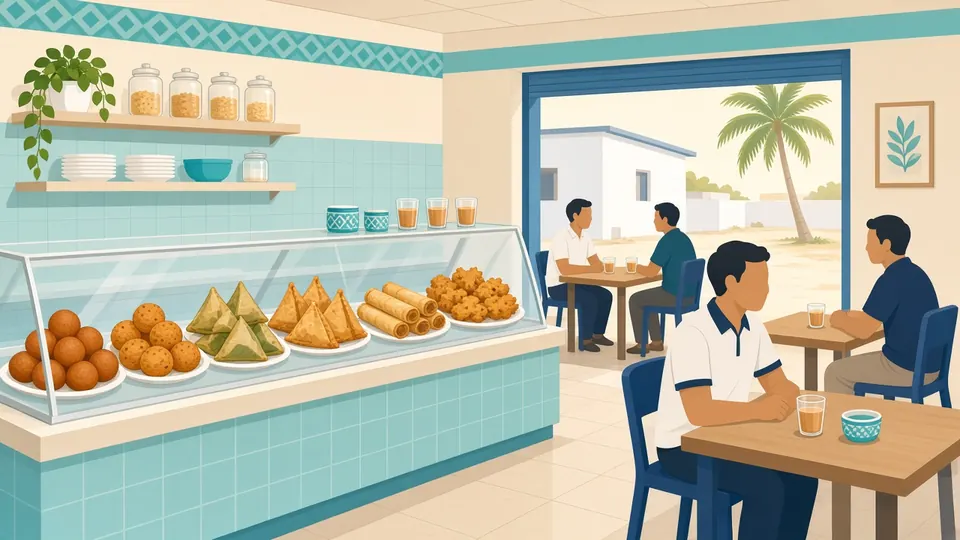
In the late afternoon, and especially at teatime, Maldivians gather for hedhikaa, an assortment of small savoury and sweet snacks served with tea. In cafés they are often called "short eats". Traditionally they sit on the table in small plates, you take what you like, and you pay for what you eat. Most are filled with a spiced mix of tuna, coconut and onion.
- Gulha: small round dumplings filled with tuna and coconut, then fried until golden.
- Bajiya: a folded, crispy pastry similar to a samosa, with a spiced fish filling.
- Masroshi: roshi dough wrapped around a tuna and coconut filling and baked or griddled.
- Keemiya (also bis keemiya): pastry rolls filled with tuna, cabbage and egg, then fried.
- Kavaabu: crunchy fried bites made with fish and lentils or rice, and spices.
- Kulhi boakiba: a firm, spicy baked fish cake cut into squares.
Sweets and desserts
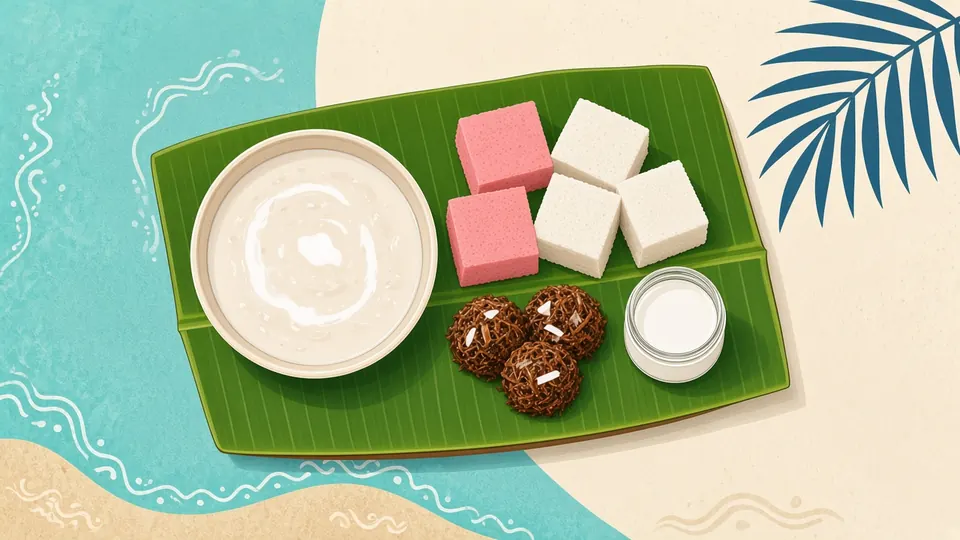
Maldivian sweets are built on coconut, rice and sugar, often scented with rosewater, cardamom or pandan leaf.
- Bondibai: a creamy rice pudding cooked with coconut milk and sugar, often made for Eid and family celebrations.
- Foni boakiba: a soft, sweet baked cake made with rice or semolina, coconut and sugar, cut into squares and served at teatime.
- Huni hakuru: shredded young coconut cooked slowly with sugar or coconut honey until it becomes sticky and golden.
You may also come across sweets made with dhiyaa hakuru, a golden coconut syrup made by gently boiling fresh palm sap.
Drinks: tea, coconut and palm sap

Sai (tea) is part of daily life. Plain sai is black tea, usually served sweet, and kiru sai is tea with milk. A cup of tea with hedhikaa is the Maldivian way to pause in the afternoon.
Kurumba, the young green coconut, is the most refreshing drink in the islands. Maldivians often enjoy the water with spoonfuls of the soft, sweet flesh inside. Ask for one after a swim.
Raa is the sap collected from the flower of the coconut palm by a skilled tapper, called a raaveriyaa, a respected traditional profession. Fresh raa is sweet, and much of it is boiled down into coconut syrup and sugar for cooking. Toddy tapping is a fading craft today, and you are unlikely to come across raa unless you visit a local island where it is still practised.
After the meal: foah and bileh
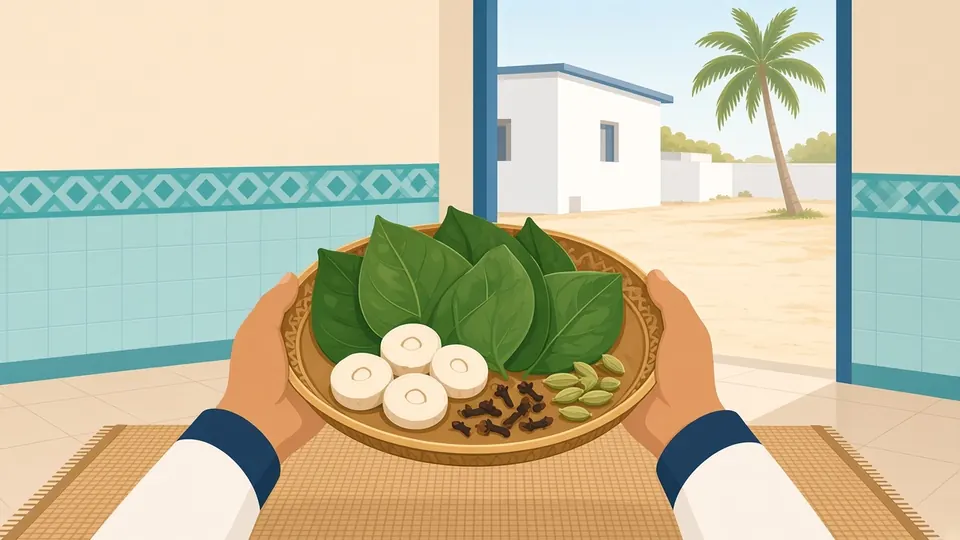
After a meal, many Maldivians enjoy dhufun: thin slices of areca nut (foah) wrapped in a betel leaf (bileh), sometimes with cloves, cardamom or other spices. It is offered to guests at homes and celebrations as a sign of hospitality.
How Maldivians eat
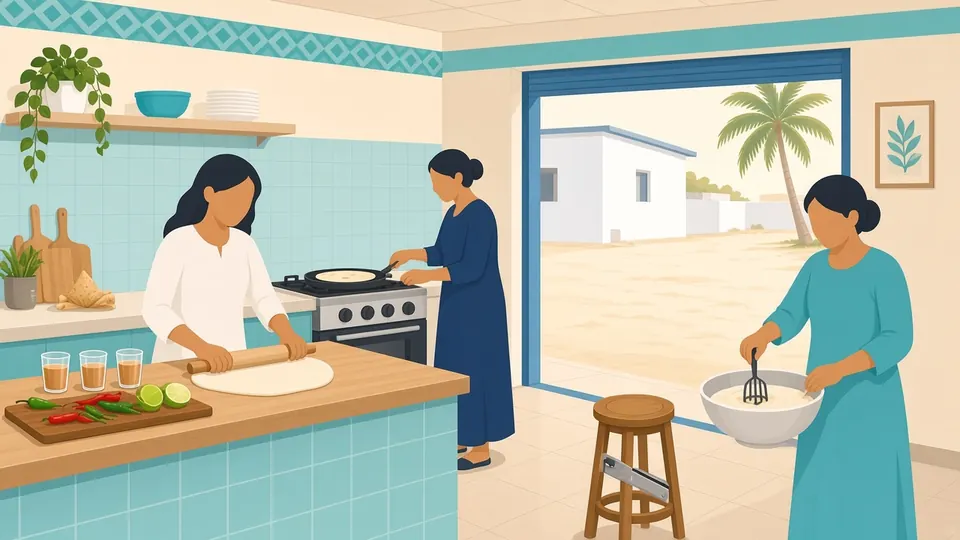
A Maldivian meal is usually served all at once rather than in courses: rice or roshi in the middle, with garudhiya or curry, rihaakuru, sliced onion, chilli and lime around it. Everyone helps themselves. Many Maldivians eat rice and curry with their right hand, mixing the broth or curry into the rice with their fingers, and roshi is torn and used to scoop. A cup of tea often follows, and on special occasions sweets like bondibai are part of the spread.
Where to taste Maldivian food
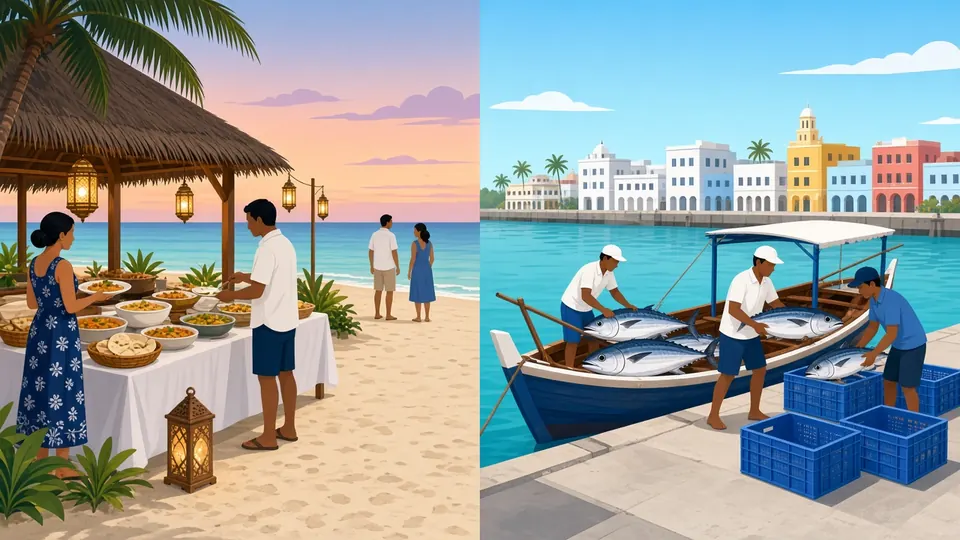
- At your resort. Many resorts serve mas huni and roshi at breakfast and host Maldivian evenings with curries, garudhiya and hedhikaa. Chefs are often happy to cook a local dish on request.
- On a local island visit. Excursions often include a stop at a small café for tea and short eats.
- In Malé. Teashops, known as hotaa, serve hedhikaa, tea and simple meals all day. At the fish market you can watch the day's tuna arrive, and the local market nearby sells dried fish, rihaakuru and coconut sweets.
Quick checklist
- Try mas huni and roshi at breakfast at least once
- Ask your resort about a Maldivian night or a local dish on request
- Have a teatime plate of hedhikaa with sai
- Drink a fresh kurumba
- Taste rihaakuru, just a little to start
- Try mixing rice and garudhiya by hand, the local way
- Look out for dried Maldive fish and coconut sweets at the Malé market
- Mention any fish or coconut allergy, as both are in most dishes
Frequently asked questions
Is Maldivian food spicy?
It can be, but chilli is usually served on the side or added to taste. Ask for "less spicy" and the kitchen will happily adjust.
What is the national dish of the Maldives?
Garudhiya, a clear tuna broth served with rice, lime, chilli and onion, is widely considered the national dish. Mas huni is the best-known breakfast.
Can I try Maldivian food at my resort?
Yes. Many resorts serve Maldivian dishes at breakfast or on themed evenings, and chefs can often prepare a local dish on request.
Is Maldivian food suitable for vegetarians?
Most traditional dishes include tuna, but there are vegetable curries, roshi, rice and many sweets. Let your resort know in advance, and the chefs will prepare suitable options.
What are hedhikaa?
Hedhikaa are Maldivian short eats, small savoury and sweet snacks such as gulha, bajiya and masroshi, usually enjoyed with tea in the late afternoon.
How is rihaakuru made?
Tuna is boiled in salted water, and the broth is then cooked slowly, often for many hours, until it reduces to a thick, dark paste. It keeps for a long time and is eaten in small amounts with rice or roshi.
Glossary
- Mas: fish, usually tuna
- Huni: grated coconut
- Bai: rice
- Roshi: flatbread
- Riha: curry
- Garudhiya: clear tuna broth
- Rihaakuru: thick tuna paste
- Hedhikaa: short eats, teatime snacks
- Sai / kiru sai: black tea / milk tea
- Kurumba: young drinking coconut
- Foah / bileh: areca nut / betel leaf
- Hotaa: local teashop or café
- Valhoamas: smoked, dried tuna (Maldive fish)