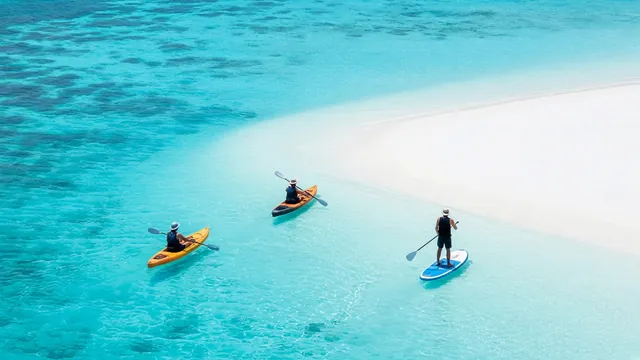
A strip of white sand in the middle of a turquoise lagoon, with nothing around it but water and sky: for many guests, a sandbank trip is the moment the Maldives feels most unreal. Sandbanks and small uninhabited picnic islands are among the simplest and most memorable excursions you can take. This guide explains what they are, what a typical trip looks like and how to make the most of it.
What is a sandbank?

A sandbank, sometimes called a finolhu in Dhivehi, is a low bank of coral sand that rises just above the water inside an atoll. It has no trees, no buildings and no shade, only soft white sand surrounded by shallow, clear water.
Sandbanks are shaped by currents and tides, so they change constantly. At low tide one may be long and wide enough to walk around; at high tide the same sandbank can shrink to a thin strip, or almost disappear. That changing nature is part of their charm.
What is a picnic island?

A picnic island is a small uninhabited island, usually with some palm trees and bushes, used for day trips. Unlike a sandbank, it offers natural shade and a little more space to explore.
Picnic islands are often used for barbecue lunches, beach afternoons and snorkelling trips. Some resorts have their own nearby picnic island for guests, while others take guests to shared spots.
What happens on a sandbank trip

Most trips start with a short boat ride on a dhoni, the traditional Maldivian boat, or a speedboat. As you arrive, the crew anchors in the shallows and helps you step down into knee-deep water.
Depending on the trip, you might find a simple set-up with towels and an umbrella, or a more elaborate one with a canopy, cushions and a table. Then the day is yours: swimming, floating in the shallows, walking the sand, taking photos or simply sitting and looking at the view.
Many trips include a snorkel stop, either around the sandbank itself or at a nearby reef. Others are timed around lunch or the late afternoon light. A typical trip lasts a few hours, and the crew will tell you when it is time to head back.
Private picnics and special set-ups

Many resorts can arrange a private sandbank experience, popular with couples and families. This might be a picnic lunch, a barbecue, a breakfast or a sunset set-up with drinks, prepared and served by the resort team.
Private set-ups usually need to be booked in advance, as they depend on the boat, the crew and the tide. If it's a special occasion, tell the resort when you book, and they will help plan the details.
Tides and weather

Sandbank trips depend on nature. The boat crew watches the tides closely and chooses times when the sandbank is at its best. Trips may be moved or changed if the sea is rough or the weather turns.
This is why it helps to book early in your stay, leaving a spare day in case a trip has to be rescheduled, and to confirm the plan with the resort the evening before. Many guests also find that morning trips bring calmer water and softer light, though the crew will always suggest the best time.
Shade and sun
There is no natural shade on a sandbank, and the sun reflects strongly off the white sand and water. Even short trips can bring a lot of sun.
Ask whether the trip includes an umbrella or canopy, and protect yourself with a wide hat, sunglasses, light long-sleeved clothing and reef-safe sunscreen. Drink plenty of water, and take breaks in the shade whenever you can. On picnic islands, the palm trees offer welcome cover.
Snorkelling around sandbanks

The water around sandbanks is often shallow and clear, with sandy areas and coral patches nearby. You may see colourful reef fish, rays gliding over the sand, and sometimes turtles or small reef sharks.
Snorkelling conditions vary with the tide and current, so always listen to the crew's briefing about where to swim and where to stay away from. Use the snorkelling equipment provided if you didn't bring your own, and ask for a life vest if you would like one.
What to bring
- Light cover-ups, a hat and sunglasses
- Reef-safe sunscreen
- A towel, if the resort doesn't provide one
- Water, if not included
- Your own mask and snorkel, if you prefer
- A waterproof bag for phones and cameras
- Water shoes, for coral rubble in the shallows
Check with the resort what is included, as some trips provide towels, water, snacks and snorkelling equipment.
Sandbanks and wildlife
Sandbanks may look empty, but they matter to wildlife. Because they are quiet and uninhabited, seabirds rest on them, and turtles sometimes come ashore on sandbanks to lay their eggs.
If you see birds on the sand, give them space and walk around them rather than through them. Never disturb a turtle nest or a turtle on the beach, and tell the crew if you spot one. Your visit can be the highlight of your day without changing anything for the animals that live there.
Leave no trace

Sandbanks are fragile. Help keep them beautiful by taking all rubbish back to the boat, leaving shells, coral and sand where they are, and keeping away from any birds resting on the sand.
In the water, never stand on coral, and keep a respectful distance from marine life. A sandbank should look exactly the same after your visit as it did when you arrived.
Quick checklist
- Book a sandbank trip early in your stay
- Ask what is included: shade, towels, water, snorkelling equipment
- Ask about a private picnic for a special occasion
- Pack a hat, sunglasses and reef-safe sunscreen
- Bring a waterproof bag for your phone
- Listen to the crew's briefing before snorkelling
- Take all rubbish back with you
Frequently asked questions
What is a sandbank in the Maldives?
A sandbank is a low strip of white coral sand rising just above the water inside an atoll, with no trees or buildings. Its size changes with the tide.
What is the difference between a sandbank and a picnic island?
A sandbank is bare sand with no shade, while a picnic island is a small uninhabited island with palm trees and some natural shade.
Can we have a private picnic on a sandbank?
Many resorts can arrange private picnics, barbecues or sunset set-ups on a sandbank. Book in advance and ask the resort what they offer.
How long is a sandbank trip?
Most trips last a few hours, including the boat ride. The crew times the trip around the tide and the weather.
Is there shade on a sandbank?
Not naturally. Ask whether the trip includes an umbrella or canopy, and bring a hat, sunglasses and reef-safe sunscreen.
Can I snorkel at a sandbank?
Often, yes. The water around sandbanks is usually shallow and clear. Follow the crew's briefing on where to snorkel.