Some nights in the Maldives, the water lights up. Each small wave breaking on the shore glows blue, and your footprints sparkle in the wet sand. Photos of this "sea of stars" are some of the most shared images of the Maldives.
It is real, and it is magical. It is also a natural event that no one can switch on. This guide explains what it is, what helps you see it, and how to look for it during a resort stay, with honest expectations.
What causes the glow
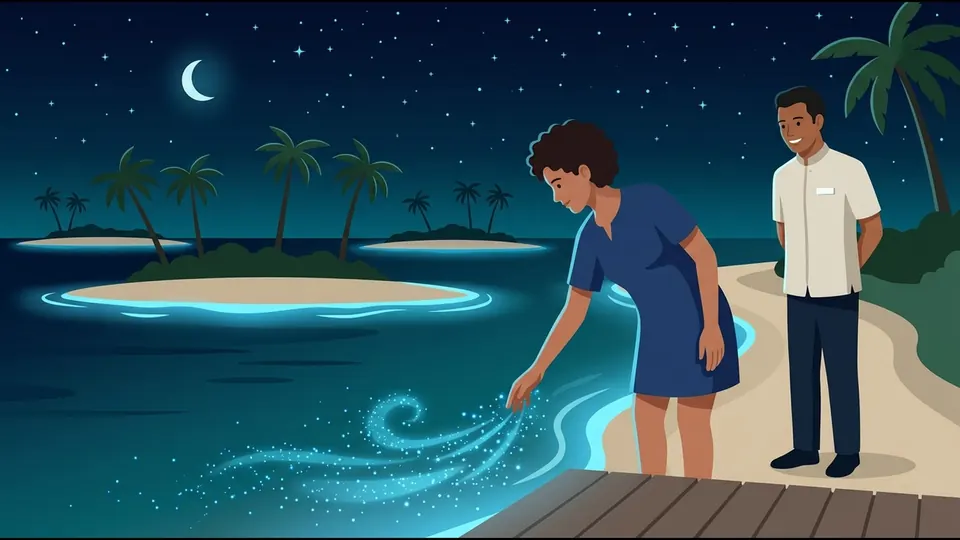
The glow comes from tiny living organisms in the water, mostly microscopic plankton called dinoflagellates. When they are disturbed, by a wave, a paddle or your hand, they give off a short flash of blue light.
One plankton is far too small to notice. When very many gather near the shore, their flashes together create the glowing waves you see in photos.
The light only appears when the water moves. Calm, untouched water stays dark, even when the plankton are there.
It is not one special place
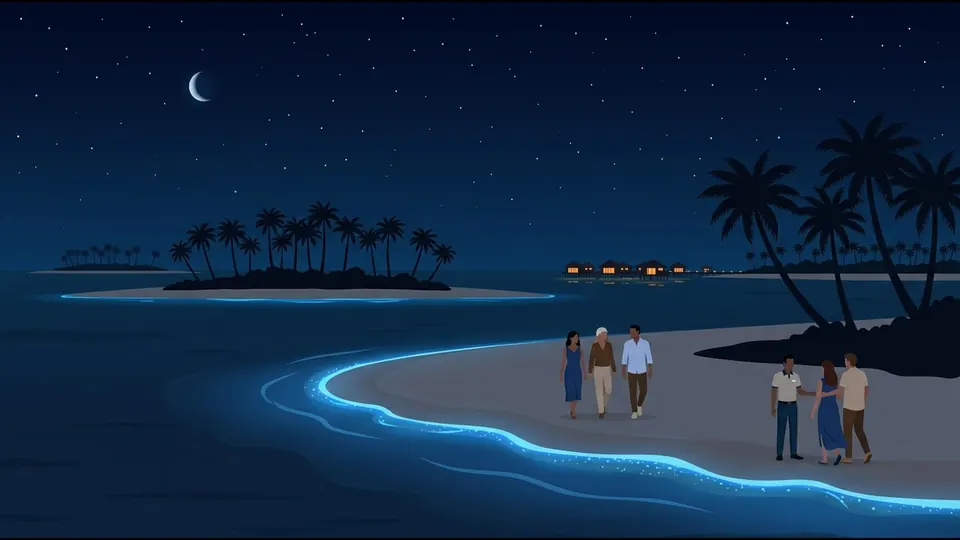
Photos often name one particular island as the home of the sea of stars. In reality, the glow is not tied to any single island.
The plankton drift with currents, wind and tides. They can appear on resort beaches, local islands and lagoons across the country, and they can be gone again the next night. A famous beach can be dark, and a quiet resort beach can glow.
That is good news for resort guests. You do not need to travel anywhere special. The best place to look is often the beach right outside your villa.
The conditions that help
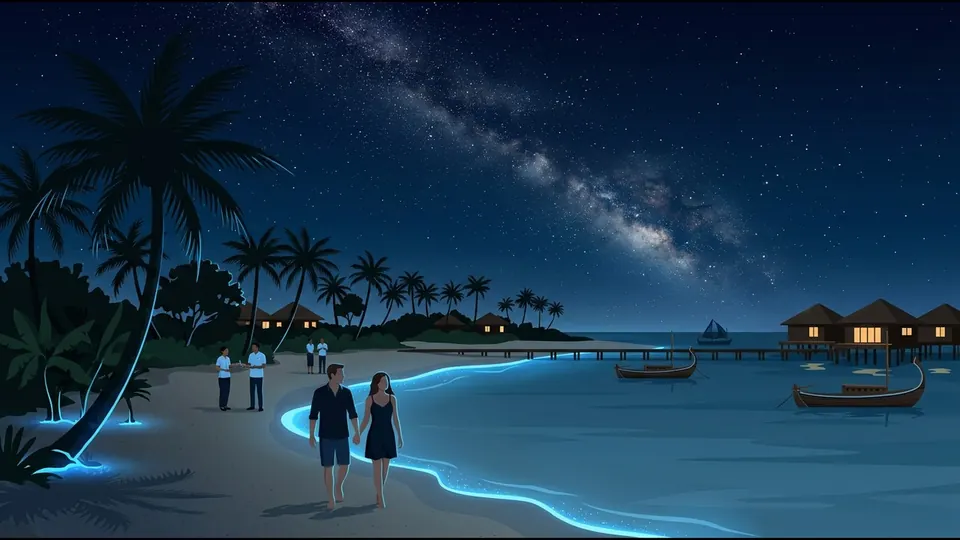
Several natural factors need to come together. You cannot control them, but knowing them helps you choose when to look.
Plenty of plankton
Above all, there need to be enough plankton close to shore. This depends on currents, nutrients in the water, wind and tides. It changes from night to night.
A dark sky
The glow is faint compared with other light. Darker nights make it much easier to see. Nights around the new moon, when there is little or no moonlight, give the best contrast. A bright full moon can wash out a weak glow, although a very strong display can still show.
Little artificial light
Lights from restaurants, villas, jetties and paths make the glow harder to see. Walk to the darkest part of the beach you can safely reach, away from bright lights.
Some movement in the water
Gentle waves breaking on the shore are ideal, because they disturb the plankton. On a flat calm night, you may see more if you gently swish the water with your hand or walk along the water's edge.
Your eyes
Your eyes need time to adjust to the dark. Turn off your phone screen, give your eyes time, and then look closely at the waterline.
Ask your resort team
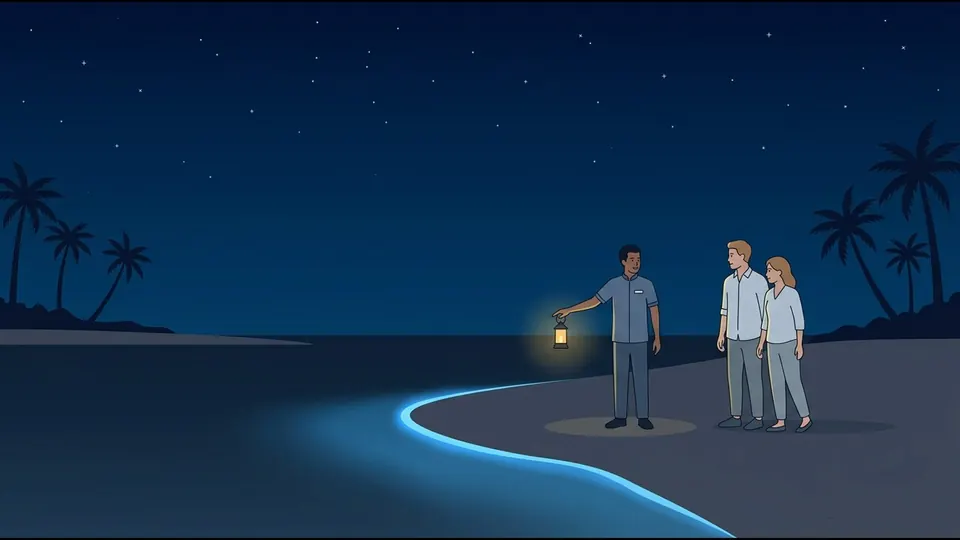
Resort staff are the best guide. Night staff, boat crews, dive teams and marine biologists often notice when the water has been glowing, and where.
When you arrive, mention that you would love to see bioluminescence. Ask:
- Has it been seen recently?
- Which part of the beach is darkest?
- Would someone let me know if it appears?
Some resorts offer guided night walks or night snorkelling trips. Ask what your resort runs.
Not guaranteed, and that is part of it
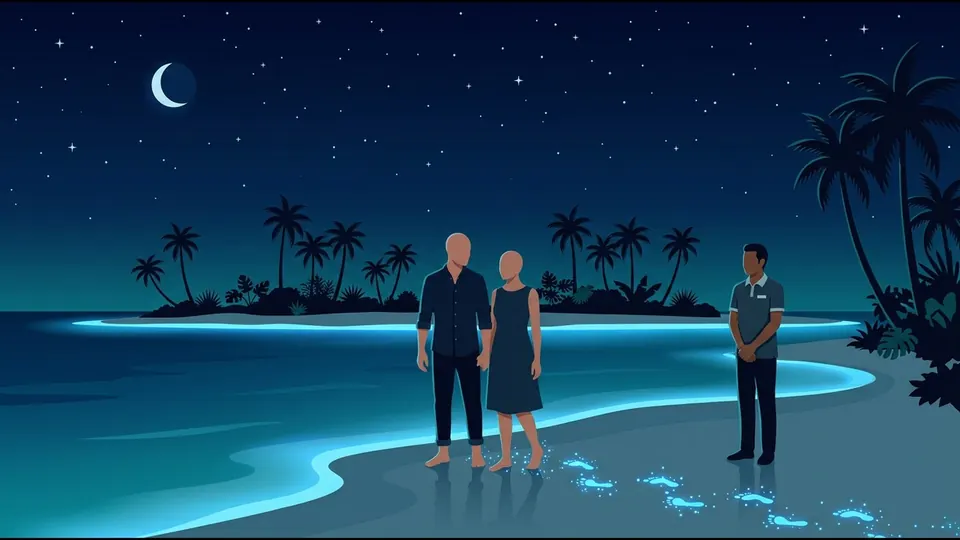
Bioluminescence cannot be booked or promised. You might see it on your first night, or not at all during your stay. Some nights show only a few sparks, and others are unforgettable.
Treat it as a lovely bonus rather than the reason for your trip. Staying several nights and checking the beach each evening gives you more chances.
Staying safe at night
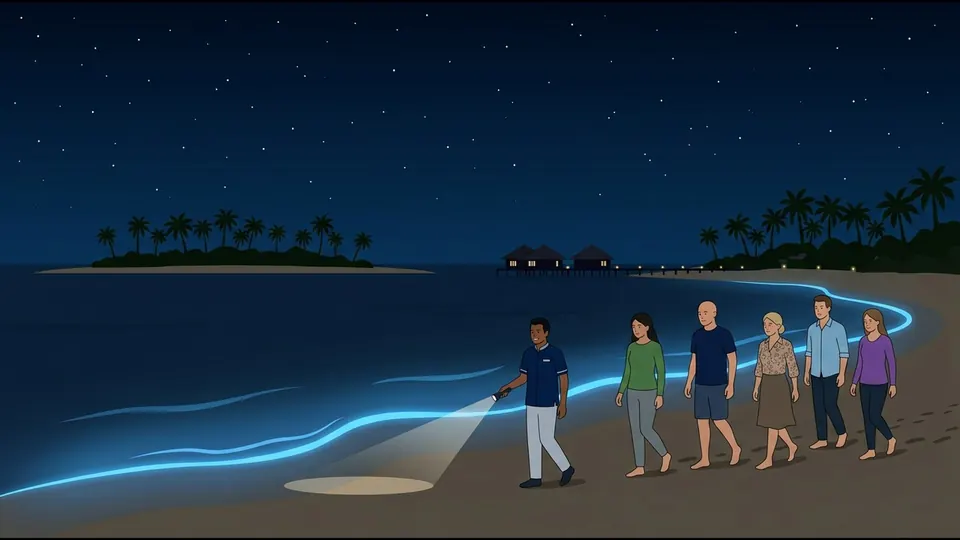
Night-time beaches are peaceful, but a few common-sense rules help.
- Stay on the beach or in the shallows. Do not swim alone at night.
- Take a small torch for the walk, and turn it off once you arrive.
- Watch your footing on coral rubble and near jetties.
- Only join night snorkelling with a guided resort trip.
- Follow any instructions from your resort team.
Respecting the reef and wildlife
The glow is part of a living marine system. Enjoy it gently.
- Do not collect water or sand in jars.
- Avoid stepping on coral.
- Follow resort guidance on where to walk at night.
Photographing the glow
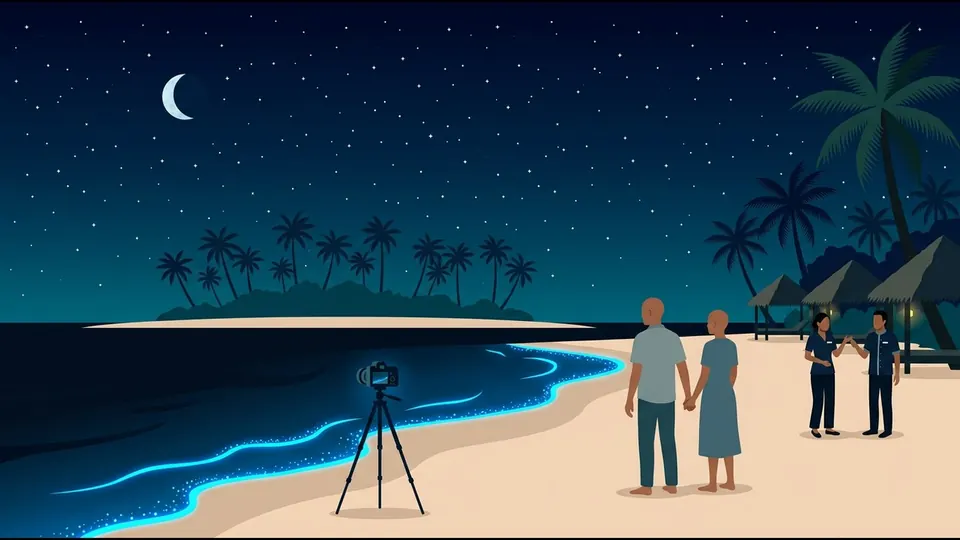
Bioluminescence is hard to photograph, and photos online are often long exposures that look brighter than what the eye sees.
If you want to try:
- Use a tripod or rest the camera on something steady.
- Use a long exposure, or your phone's night mode.
- Turn off the flash.
- Be patient and take many shots.
Do not worry if the photo does not do it justice. The memory usually does.
Frequently asked questions
What is the "sea of stars" in the Maldives?
It is bioluminescence: tiny plankton in the water that give off a blue glow when waves or movement disturb them.
Where is the best place to see bioluminescence in the Maldives?
It is not tied to one island. It can appear on resort beaches across the country. The darkest part of your resort beach is a good place to look.
Is bioluminescence guaranteed?
No. It depends on natural conditions that change every night. Treat it as a bonus if you see it.
What conditions help you see it?
Plenty of plankton near shore, a dark sky with little moonlight, little artificial light, and gentle waves.
Can my resort help me see it?
Yes. Ask your resort team if it has been seen recently, where the darkest beach is, and whether they offer night walks.
Can I swim in the glowing water?
Stay in the shallows, never swim alone at night, and only join night snorkelling as a guided resort trip.