Money is refreshingly simple at a Maldives resort. Most guests sign everything to their room and settle one bill when they leave. Still, a few things are worth knowing: which currency to bring, how cards work, what the extra lines on your bill mean, and whether to tip.
This guide covers all of it, without numbers that go out of date.
The local currency
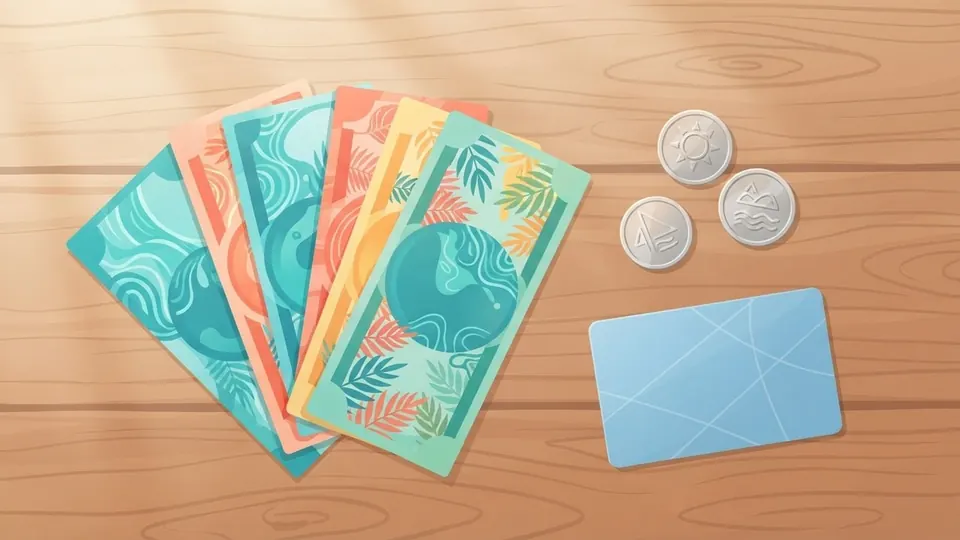
The official currency of the Maldives is the Maldivian rufiyaa, written MVR or Rf. It is issued by the Maldives Monetary Authority, the country's central bank.
You will see the rufiyaa on inhabited islands, in Malé and at local shops. At resorts, you will rarely need it.
The US dollar at resorts
Resorts in the Maldives usually price and bill in US dollars. Room rates, meals, excursions and spa treatments are typically shown in dollars, and your final bill is usually in dollars too.
Some resorts also accept other major currencies such as euros or pounds sterling, but this varies. Check with your resort if you plan to pay in cash in another currency.
If you bring US dollar notes, make sure they are clean and undamaged. Torn or heavily marked notes may be refused.
Paying by card
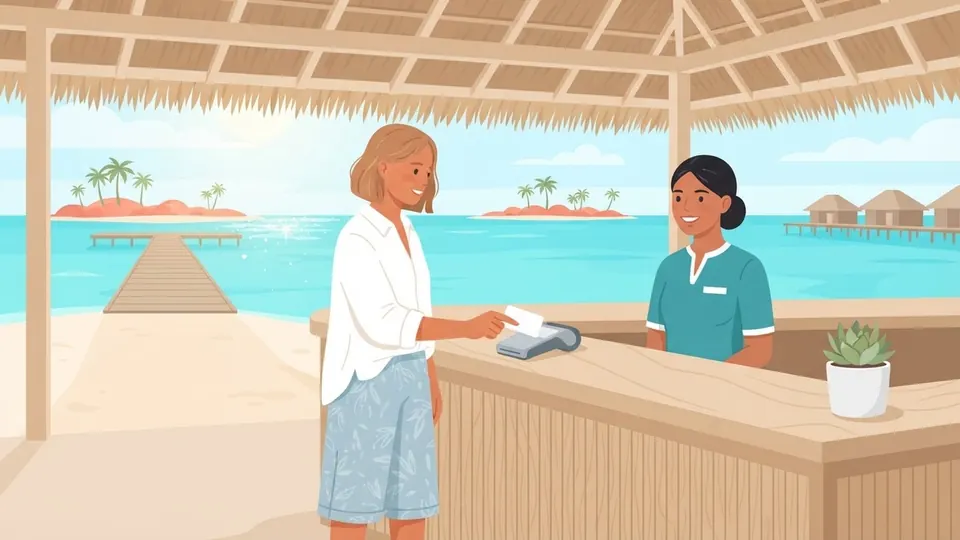
The Maldives Tourism website notes that all major credit cards are accepted in the country. At resorts, Visa and Mastercard are widely accepted, and many resorts also take American Express, UnionPay and JCB.
Before you travel:
- Tell your bank you are travelling to the Maldives, if your bank needs to know.
- Check whether your card charges foreign transaction fees.
- Bring two cards from different networks, in case one does not work.
When paying by card, you may be offered a choice of paying in your home currency or in US dollars. Compare the rate before you decide. Paying in the local billing currency is often cheaper, but check with your bank.
Signing to your room
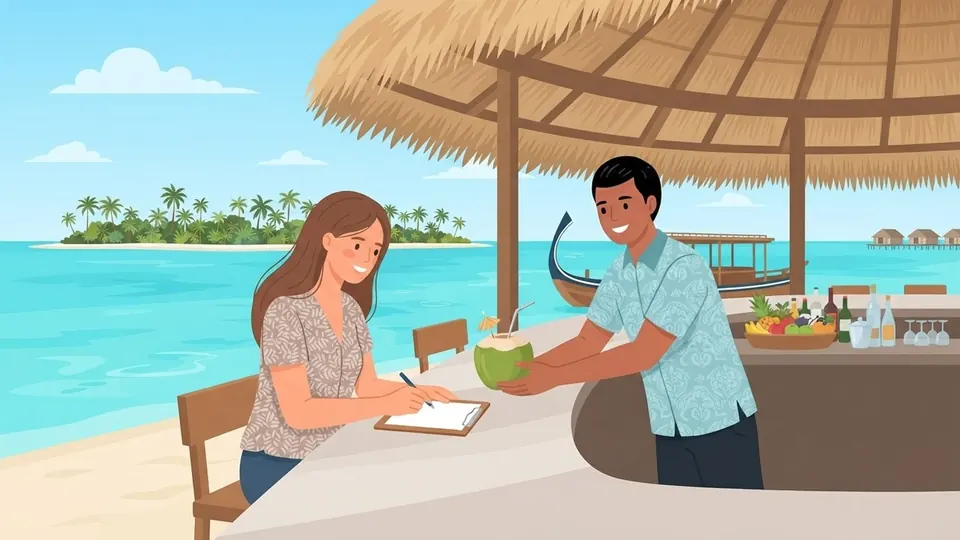
At check-in, most resorts ask for a card to open a room account. During your stay, you sign for meals, drinks, excursions and spa treatments, and everything is added to your account.
At check-out, you review the bill and pay it in one go. Ask for a running statement during your stay if you want to keep track.
Cash: how much do you need?
At a resort, very little. Most guests carry a small amount of cash only for tips and small extras.
Small US dollar notes are the most useful. Large notes can be hard to change.
If you plan a trip to an inhabited local island or a day in Malé, cash becomes more useful. Small cafés and shops may prefer rufiyaa, and cash machines are found mainly in Malé and on some larger islands.
Understanding your bill
Resort prices in the Maldives are often quoted before taxes and charges. You may see the symbol "++" next to a price, which means a service charge and tax are added on top.
A typical resort bill includes:
- Service charge. Required by Maldivian rules for tourism businesses and shared among staff.
- Tourism Goods and Services Tax (TGST). A government tax on goods and services at tourist establishments.
- Green Tax. A government tax charged per person, per night at resorts.
The rates are set by the government and can change, so we do not list them here. When you book with Maldives Desk, we tell you clearly what is included.
The service charge is not a tip
The service charge on your bill is collected by the resort and shared among its staff under Maldivian rules. It is not handed directly to the people who served you.
That is why some guests also leave a personal tip for staff who made a difference. Others rely on the service charge alone. Both are fine.
Tipping in the Maldives

Tipping is optional. You will receive the same warm service whether you tip or not.
If you would like to say thank you, these are common ways to do it:
- Your villa host or butler. Many guests leave a tip at the end of the stay, in an envelope with a note.
- Room attendants. A tip left in the room near the end of your stay.
- Restaurant staff. A tip at the end of a special meal, or at the end of your stay.
- Boat crew, dive and snorkel guides. After an excursion or dive you enjoyed.
- Spa therapists. After a treatment.
Some resorts have a shared staff tip box at reception. This is a good choice if you want your thanks to reach the whole team, including staff you never meet, such as the kitchen and gardeners.
There is no fixed amount. Tip what feels right to you, in cash, ideally in US dollars. Some resorts also let you add a tip to your room bill. Ask reception how it works.
Tipping on local islands
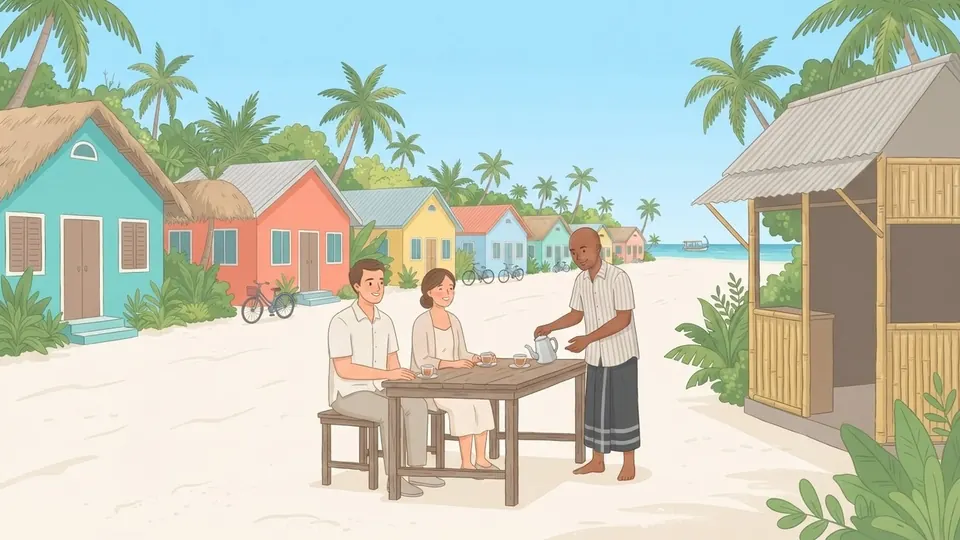
On inhabited islands, tipping is less common but always appreciated, for example for a guide who showed you around. Small rufiyaa or US dollar notes both work.
Money tips from our team

- Bring a small amount of cash in small US dollar notes.
- Bring two cards from different networks.
- Keep the cash for tips separate from your main wallet.
- Check your bill during your stay, not only at check-out.
- If you are unsure about anything, ask reception. Resort teams are used to these questions.
Frequently asked questions
What currency should I bring to the Maldives?
Resorts usually bill in US dollars. Bring a card for your main bill and a small amount of US dollars in small notes for tips.
Are credit cards accepted in the Maldives?
Yes. Major cards are widely accepted at resorts. Bring two cards from different networks just in case.
Do I need Maldivian rufiyaa?
Usually not at a resort. Rufiyaa is more useful on inhabited local islands and in Malé.
Is tipping expected in the Maldives?
No. Tipping is optional. A service charge is already added to resort bills and shared among staff.
Who should I tip at a resort?
Many guests thank their villa host, room attendant, restaurant staff, boat crew or spa therapist. Some use a shared staff tip box.
What does "++" mean on a Maldives price?
It means the service charge and government tax are added on top of the price shown.