The Maldives is famous for calm lagoons and overwater villas. Fewer people know it is also a well-loved surf destination. Long lines of swell from the Indian Ocean reach the outer edges of the atolls and peel along the reefs in clean, warm water.
This guide explains where the waves are, what reef breaks are like, what beginners can expect, and how surfing usually works during a resort stay.
How waves form around the atolls
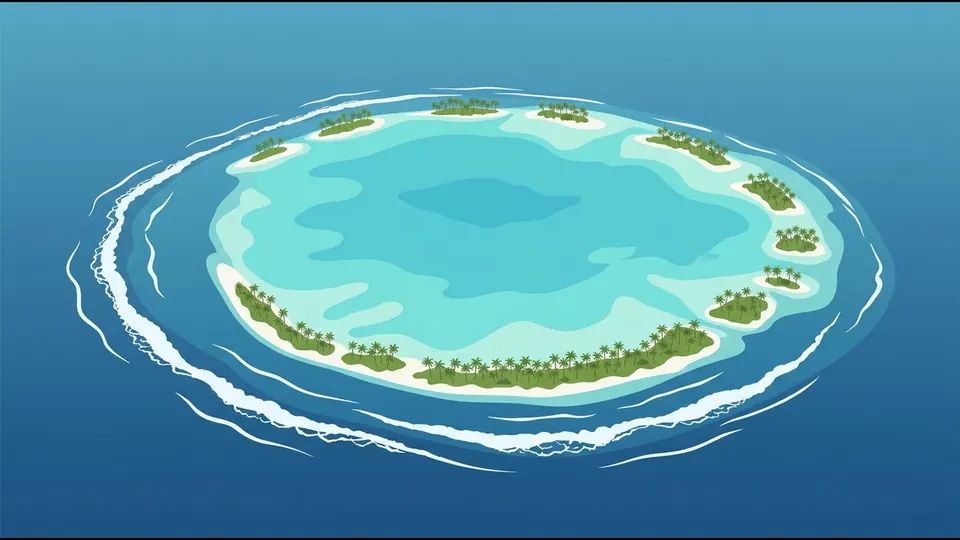
Each atoll is a ring of coral reefs and islands. Ocean swell travels across open water and breaks where it meets the outer reef. Where there are channels and passes between reefs, waves can peel neatly along the reef edge.
That is why Maldives surf breaks are almost all reef breaks. There are very few sandy beach breaks. Inside the lagoons, the water is usually flat, which is perfect for swimming and snorkelling but not for surfing.
Swell and wind change through the year. Different areas, and different sides of an atoll, can work at different times. Waves of some kind can be found year-round, but size and consistency vary, so it is worth talking to us or your resort before you travel. Our guide to the best time to visit the Maldives covers the surf seasons.
The main surf areas
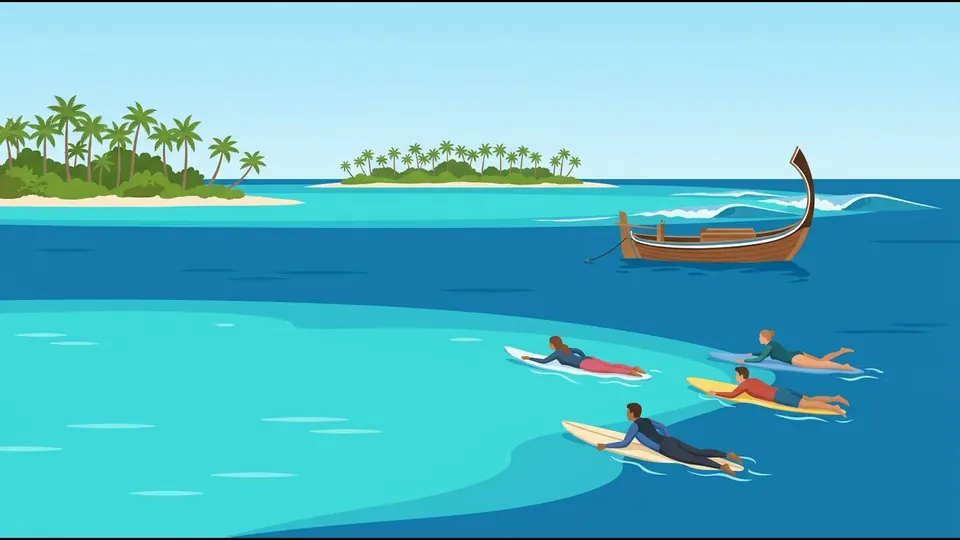
Surf in the Maldives is spread across several regions rather than one place.
The atolls near the airport
The atolls around Malé, closest to the main international airport, have many of the best-known breaks in the country. Several are a short boat ride from each other. Because they are easy to reach, popular breaks can be busy.
The atolls further south
South of Malé, a string of more remote atolls has reef passes with room to spread out and usually fewer surfers. The far south is the most remote, reached by domestic flight and boat, and its breaks generally suit intermediate and advanced surfers.
The northern atolls
The atolls to the north see far fewer surfers and are much less explored.
What reef breaks are like
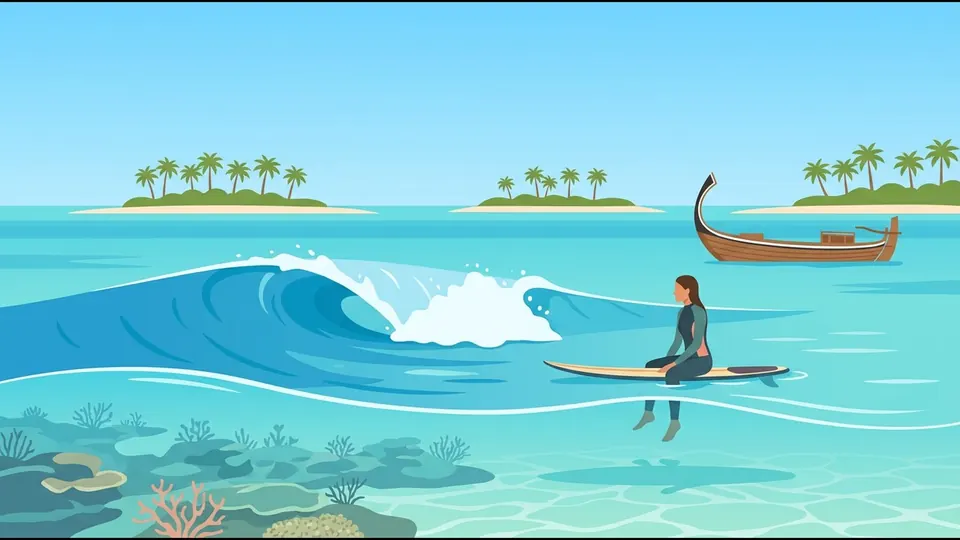
Reef breaks give clean, shaped waves, but they need respect.
- The wave breaks over living coral, often in shallow water.
- Reef can be sharp. Booties or reef shoes can help, and a rash vest protects from sun and scrapes.
- Paddling out usually means a boat drop-off near the line-up.
- Currents can run through channels between reefs.
Your surf guide will explain each break before you paddle out. Always follow their briefing, and ask if you are unsure.
Is the Maldives good for beginners?
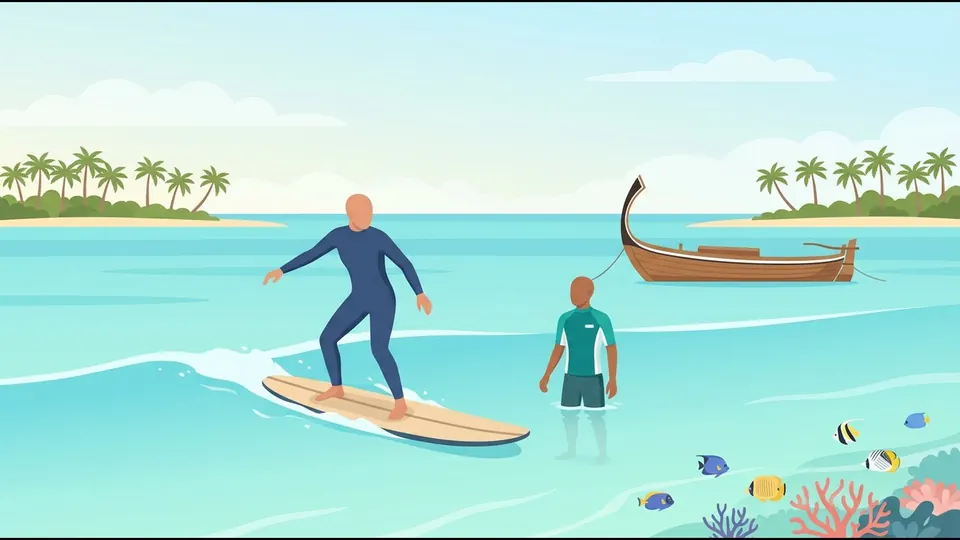
It can be, with the right set-up. Most Maldives breaks are better suited to surfers who can already paddle, catch unbroken waves and turn. Reef breaks are less forgiving than sandy beaches.
That said, beginners do learn here. A few breaks are known as gentler and more beginner friendly, and some surf guiding teams offer lessons and choose softer conditions for new surfers.
If you are a beginner:
- Tell us your level when you enquire, so we can suggest suitable resorts.
- Book lessons with a qualified surf guide or coach.
- Surf only with guidance, never alone.
- Expect to spend some sessions learning in smaller waves.
Not every day will be right for learning. Flexibility helps.
Surf boats and surf camps
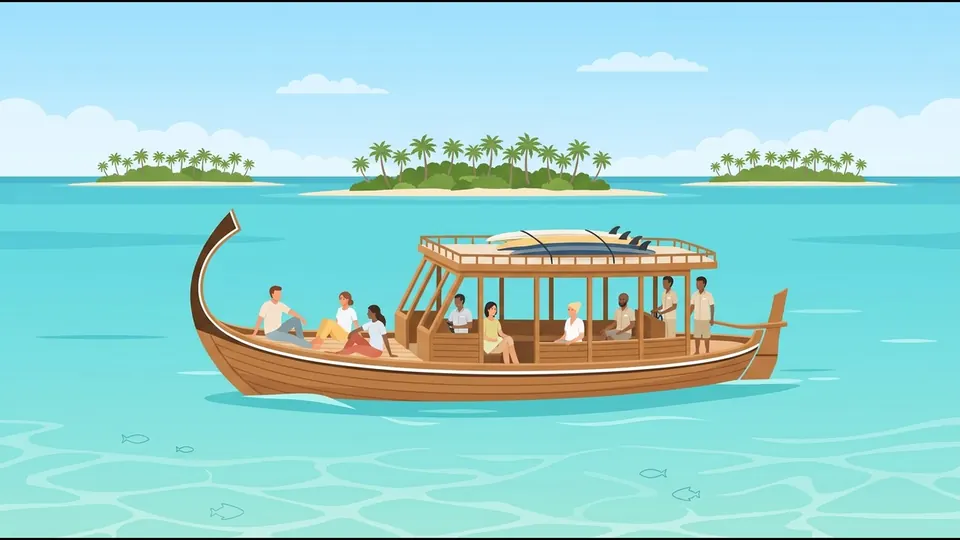
There are a few ways surfers travel the Maldives.
Surf boats
Some surfers stay on a boat that moves between breaks, following the swell. This suits experienced surfers who want to surf as much as possible and do not mind simple living on board.
Surf camps on local islands
Some guest houses on local islands focus on surfing, with boats to nearby breaks. These are usually informal and social.
Resorts near surf breaks
Some resorts sit close to good breaks and offer boat trips to them. This suits couples or families where one person surfs and the others want a beach holiday. Maldives Desk focuses on hand-picked resorts, so this is the option we help with most.
How resort surf guiding usually works
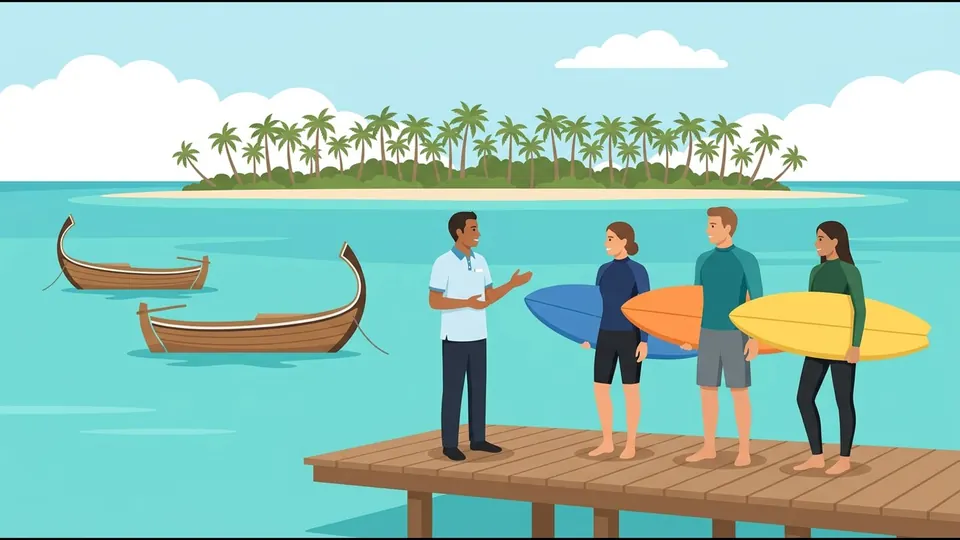
At resorts close to surf, a surf team or guiding partner often runs the programme. Details differ, but it usually looks like this:
- Boat trips to nearby breaks, often at set times each day.
- Guiding by staff who know the reefs, tides and currents.
- Board hire, so you do not have to bring your own.
- Lessons and coaching for different levels.
- Daily surf reports, telling guests which breaks are working.
At some resorts, the nearby break is reserved for resort guests, with a cap on surfer numbers. Your resort team will explain any local arrangements.
If you plan to surf, mention it when you enquire. We will ask the resort what their surf programme includes and how far the nearest breaks are.
Surfing respectfully
Surf etiquette matters even more in a small, quiet line-up.
- Wait your turn and do not drop in on other surfers.
- Be friendly with local surfers and other guests.
- Do not stand on or touch coral.
- Use reef-safe sunscreen and take any litter back with you.
Bringing your own board
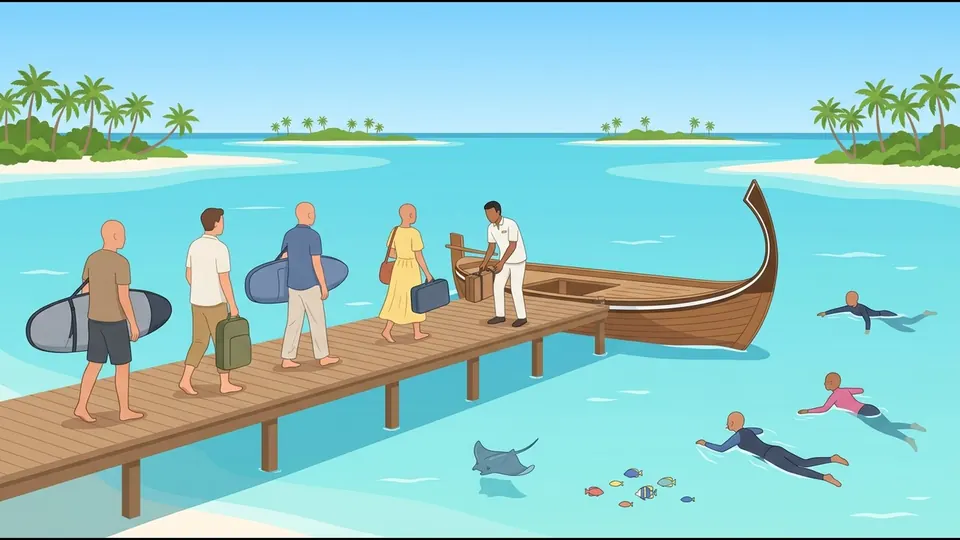
Many surfers bring their own boards. If you do, check the sports equipment rules with your airline and with your seaplane, domestic flight or boat transfer before you travel. A good board bag, spare fins and wax are worth packing. Some resorts and surf teams also rent boards, so ask before you decide.
Frequently asked questions
Is there surfing in the Maldives?
Yes. Swell from the Indian Ocean breaks on the reef passes of the atolls, creating long, peeling reef breaks.
Are Maldives waves good for beginners?
Most breaks are reef breaks that suit surfers with some experience. Beginners can learn with a qualified coach on smaller days, but should never surf without guidance.
Can I surf year-round in the Maldives?
Waves can be found year-round, but size and consistency vary by area. Ask us or your resort about conditions for your travel dates.
Do I need my own surfboard?
Not always. Some resorts and surf teams rent boards. If you bring your own, check your airline and transfer rules for sports equipment.
Can I surf from a resort?
Yes. Some resorts are close to surf breaks and offer guided boat trips, board hire and lessons. Tell us you want to surf and we will check what each resort offers.
What should I wear to surf on a reef?
A rash vest or surf top protects from sun and scrapes, and reef booties can help. Your surf guide will brief you on each break.