There is no bad month to visit the Maldives. The islands sit almost on the equator, so it is warm all year, with average temperatures between about 25°C and 32°C and sea water that stays bath-warm. What changes through the year is the wind, the rain and the sea life. Choosing your dates is really about choosing which version of the Maldives you want.
Here are the two seasons, what each one is usually like, and the best times for diving, mantas, whale sharks, surfing or a quiet week in the sun.
The two seasons at a glance
The Maldives has two monsoons, known locally as Iruvai and Hulhangu.
- The northeast monsoon (Iruvai), the dry season. The Maldives Meteorological Service describes a core dry season with a short transition period on either side. In everyday travel terms, this is the drier, sunnier half of the year, and the core dry season averages around 10 to 11 hours of sunshine a day.
- The southwest monsoon (Hulhangu), the wet season. This normally covers the other half of the year. Expect more cloud, more wind and more rain, with around 7 to 9 hours of sunshine a day. Rain usually comes as showers or short storms with sunny spells in between, not days of grey drizzle.
Rainfall increases from north to south, so the southern atolls are generally wetter and can see showers even in the dry season. And the weather never follows the calendar exactly: a dry-season week can bring a squall, and a wet-season week can be gloriously calm.
Season by season
| Season | Typical weather | Good for | How busy |
|---|---|---|---|
| Dry (NE monsoon) | Sunny, low humidity, calm seas | Beach days, snorkelling, diving with clear water | Busy |
| Transition | Among the hottest months; calm, with building cloud and more frequent thunderstorms | Diving, surf season opening, Easter breaks | Busy around Easter, then easing |
| SW monsoon onset | Windier, unsettled spells, heavier showers | Surf, manta season starting, quieter islands | Quieter |
| Wet (SW monsoon) | Showers and breezy days between sunny spells | Surf, mantas on the eastern side of the atolls | Quieter |
| Transition | Drying out, though some rain lingers, mainly in the centre and south | Festive stays, family holidays | Very busy from Christmas to New Year |
What each season is good for
Diving and snorkelling
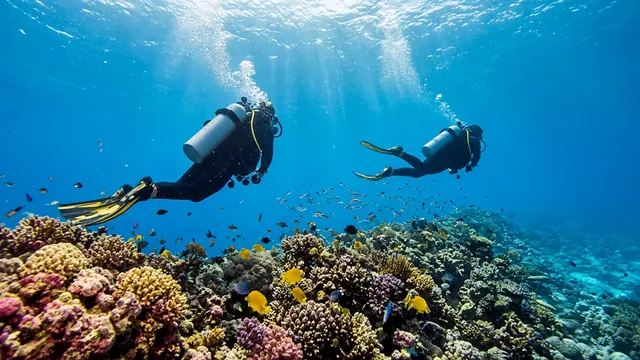
You can dive and snorkel all year. In the drier months the sea is usually calmer and many divers find the water at its clearest, which suits reef photography, channel dives and first-time snorkellers. The wetter months bring more plankton, which can soften visibility but brings the big filter feeders in.
Manta rays
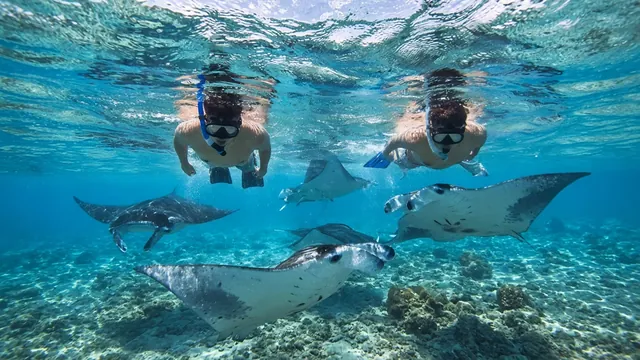
Reef mantas follow the plankton, and the plankton follows the monsoon. Research by the Manta Trust shows that during the northeast monsoon mantas gather mainly at sites on the western side of the atolls, and during the southwest monsoon they move to the eastern side. That means a good resort and dive centre can usually find mantas in either season.
The most famous gathering is at Hanifaru Bay in Baa Atoll, a protected area within the Baa Atoll UNESCO Biosphere Reserve. Mantas feed there in the southwest monsoon, and the biggest aggregations are often in its second half, especially near the new and full moon. Hanifaru is snorkel-only, visits are timed and limited, and no one can promise a sighting on a given day.
Whale sharks
The South Ari Marine Protected Area, on the southern rim of Ari Atoll, is one of the few places in the world where whale sharks can be seen year-round. Most are young males that return to the same area again and again. Sightings are never guaranteed, but this is the place to stay if a whale shark is on your list, whatever the month.
Surfing
The surf season broadly spans the southwest monsoon and the transition weeks around it, driven by southern-hemisphere swells. In the Malé atolls the biggest swells usually arrive in the heart of the southwest monsoon. The southern atolls are usually best at the start and end of the season, when the winds are cleaner. If surfing matters, tell us early: some breaks are best reached from particular resorts. Our surfing guide explains the surf areas and how surf trips work.
A quiet, restful stay
If you want calm seas and long sunny days above all, the core dry season is the safest choice. If you would rather have emptier beaches and don't mind a passing shower, the southwest monsoon and the weeks after it are often wonderful. Resorts are quieter, the light is softer, and the island still feels like the Maldives.
Busy periods and festive peaks
Demand follows the European and Asian holiday calendars as much as the weather. The busiest stretch is Christmas to New Year, followed by the rest of the dry season, with extra demand around Easter and Chinese New Year. Over the festive period many resorts set minimum stays and include compulsory gala dinners, and the most popular villas are often reserved many months ahead.
The southwest monsoon months are usually the quietest and best-value time to travel, though European summer holidays bring more families.
Practical tips for choosing dates
- Book festive dates early. For Christmas, New Year or Easter, we recommend enquiring as soon as your plans are firm.
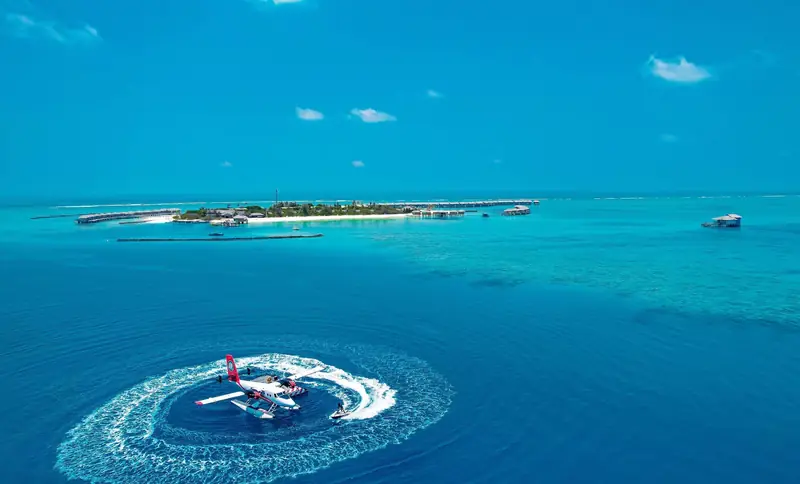
- Think about your transfer in the wet season. A short speedboat transfer is less affected by weather than a longer journey. Seaplanes fly only in daylight and can be delayed in poor visibility (more on transfers).
- Match the resort to the season. Mantas, whale sharks and surf are all about location as well as timing. Tell us what you'd love to see, and we'll suggest resorts on the right side of the right atoll.
See also
Frequently asked questions
What is the best month to visit the Maldives?
For the driest, sunniest weather, the heart of the dry season is usually the safest choice. For mantas and quieter resorts, consider the second half of the southwest monsoon. Every season has something to offer.
Is it worth visiting the Maldives in the rainy season?
Yes, for many travellers. Rain usually falls as showers or short storms with sunny spells in between, the islands are quieter, and it is the main season for manta gatherings and surf.
When can I see manta rays in the Maldives?
All year, at different sites. Mantas favour the western side of the atolls in the northeast monsoon and the eastern side in the southwest monsoon. Hanifaru Bay in Baa Atoll is busiest during the southwest monsoon.
When is whale shark season in the Maldives?
Whale sharks are seen year-round in the South Ari Marine Protected Area. Sightings depend on conditions on the day and are never guaranteed.
When is the surf season in the Maldives?
Broadly during the southwest monsoon and the transition weeks around it. The Malé atolls usually peak in the heart of the southwest monsoon, while the southern atolls are often best at the start and end of the season.
How far ahead should I book for Christmas and New Year?
As early as you can. Festive dates are the most in demand, many resorts set minimum stays over the holidays, and the most popular villas are often reserved months ahead.