Many guests dive for the first time in the Maldives, and many experienced divers come back year after year. Whichever you are, your dive centre shapes the experience. This guide explains how dive centres at Maldives resorts usually work, what courses they offer and how to plan your diving. For the reefs themselves, see our guides to diving in the Maldives and dive sites atoll by atoll.
How resort dive centres work

A dive centre is an essential part of most resorts, usually on the island itself, usually near the jetty or the beach. It is run by a team of qualified instructors and dive guides, often with boat crews who know the local reefs well.
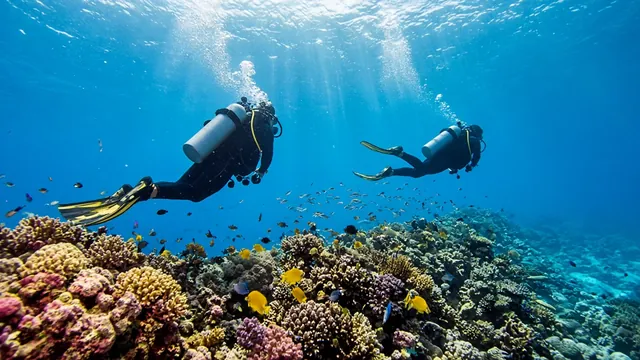
A typical day has one or two boat dives in the morning, sometimes an afternoon dive, and occasional night dives or special trips. Many centres also offer house reef dives straight from the beach or jetty.
On your first visit, the team will check your certification and logbook, ask you to complete the usual forms, and talk about your experience. They will then suggest dives that suit your level. Every dive begins with a briefing about the site, the plan and the conditions. Listen carefully and ask questions.
Try-dives for first-timers
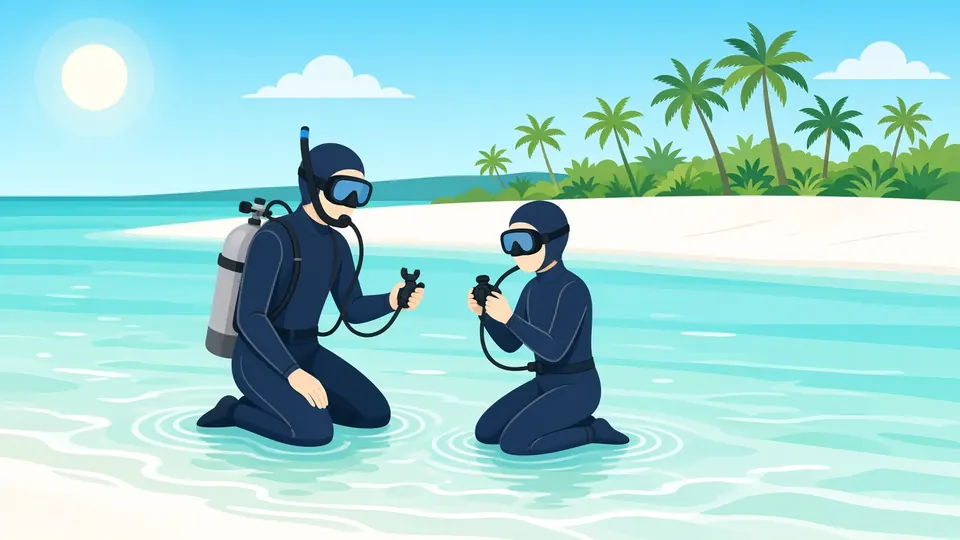
If you have never dived, a try-dive is the easiest way to start. It is often called a "discover" or "introductory" dive.
A dive professional provides the equipment, explains the basic skills and answers your questions. You then try breathing underwater in a pool or calm, shallow water, with the instructor beside you. Ask the dive centre what their try-dive includes.
You do not need any experience, only a reasonable level of comfort in the water. The dive centre will ask some health questions before you start, and will explain anything that might affect whether you can dive.
Beginner courses
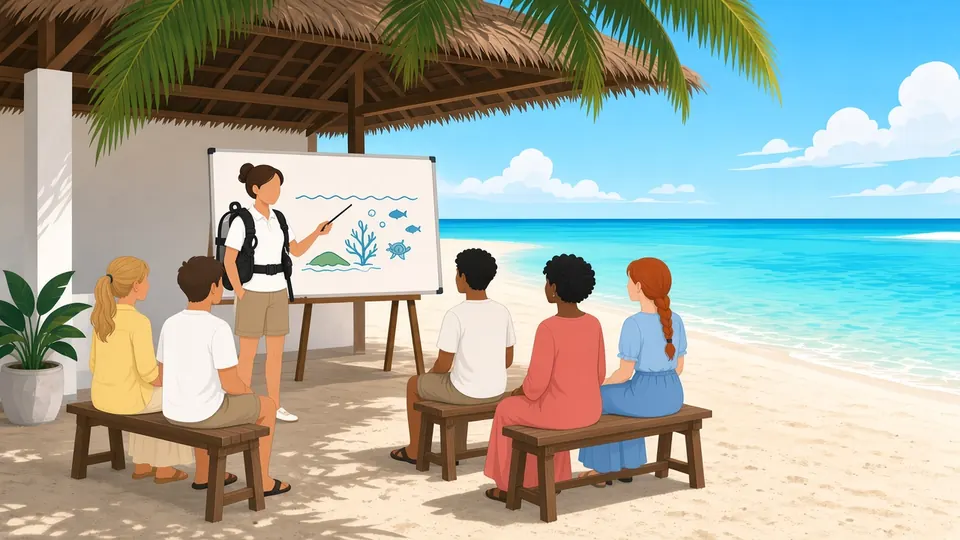
If you enjoy your first dive, you can take a full beginner course during your holiday. The entry-level certificate is usually called Open Water Diver, and it is the first full diving qualification.
The course combines theory, practice in shallow water and several open-water dives. Many agencies let you do the theory online before you travel, so you spend more of your holiday in the water. The course can take just a few days. Ask the dive centre how long theirs takes, so you can plan the rest of your stay around it.
Certification agencies
Dive training follows the standards of an international training agency. The best-known agencies in the Maldives are PADI and SSI, and others are also recognised.
Dive schools in the Maldives offer courses from beginner to advanced level, often in several languages. If you are already certified, bring your certification card or have the digital version on your phone, and ask the dive centre whether they can continue your training with your agency.
Certification levels
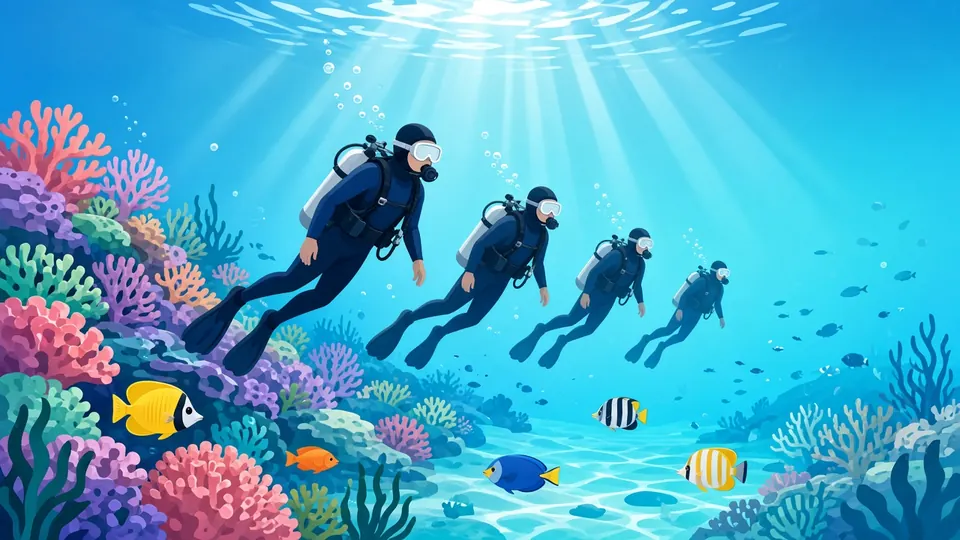
After Open Water, there are several steps you can take on holiday:
- Advanced Open Water: a series of adventure dives, such as deep, navigation or boat diving, that build your confidence.
- Specialty courses: for example Nitrox, underwater photography, wreck diving or fish identification.
- Rescue Diver: a course focused on looking after yourself and others underwater.
- Professional levels: such as Divemaster and Instructor, which take longer and are usually planned separately.
Some Maldivian dive sites, especially channels with current, are best suited to divers with more experience. The dive centre will tell you which sites match your certification and logged dives.
Nitrox
Many Maldives dive centres offer Nitrox, also called enriched air. It contains less nitrogen than ordinary air, and it is one of the most popular specialty courses.
To dive with Nitrox, you need a Nitrox certificate. If you don't have one, many dive centres can teach the course during your stay. The instructors will explain how it works and when it is used.
What to bring and what to rent

Dive centres usually rent the full set of equipment: wetsuit, mask, fins, regulator, buoyancy jacket and dive computer. The equipment is checked and serviced by the dive team.
Many divers like to bring a few personal items:
- Your certification card and logbook, paper or digital
- Your own mask, for a comfortable fit
- Your own dive computer, if you have one
- A wetsuit you know fits well, if you prefer your own
Check your airline's baggage allowance before packing heavy equipment. Remember that small transfers like seaplanes also have baggage limits.
Refresher dives
If you are certified but haven't dived for a while, most dive centres will ask you to do a short refresher first. Usually it is a review of the basics with an instructor, in shallow water or a pool.
It is a relaxed way to get comfortable again before going out on the boat, and the dive centre decides when one is needed. Bring your logbook so they can see your last dive.
Dive boats and dhonis
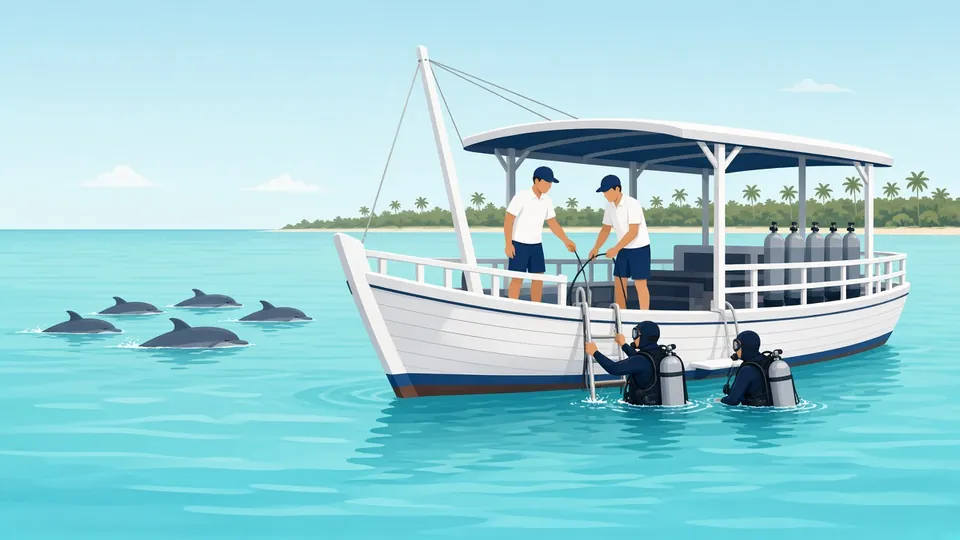
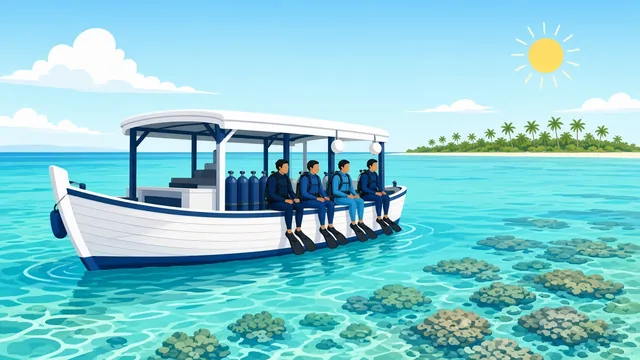
Most boat dives in the Maldives are done from a dhoni, the traditional Maldivian wooden boat, now built with a shaded deck, benches and racks for the tanks. Some resorts also use faster modern boats.
The crew helps you with your equipment, and the dive guide leads the briefing on board before you enter the water. Trips are usually short, as many sites are close to the resort. Between dives, you may spot dolphins or turtles from the deck.
Bring a hat, sunscreen, water and a light top for the boat.
Diving for children
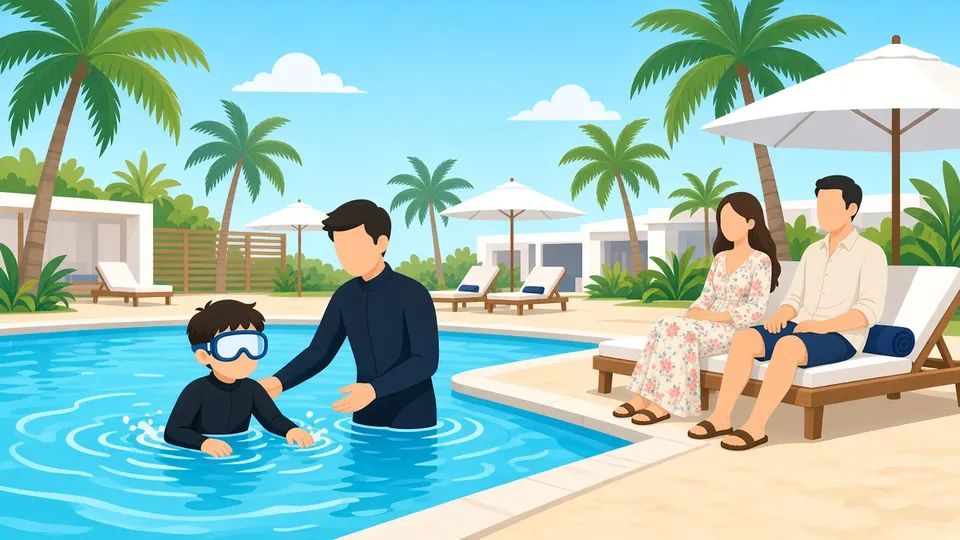
Many dive centres offer programmes for children, run by instructors trained to teach young divers. These usually start with a fun first session in a pool or very shallow water, under the direct supervision of an instructor. Some agencies also offer junior courses for older children.
Age limits and rules depend on the agency and the resort. If your children are keen, ask the dive centre about their programmes before you book. Snorkelling is also a wonderful way for children to discover the reef.
Liveaboards in brief
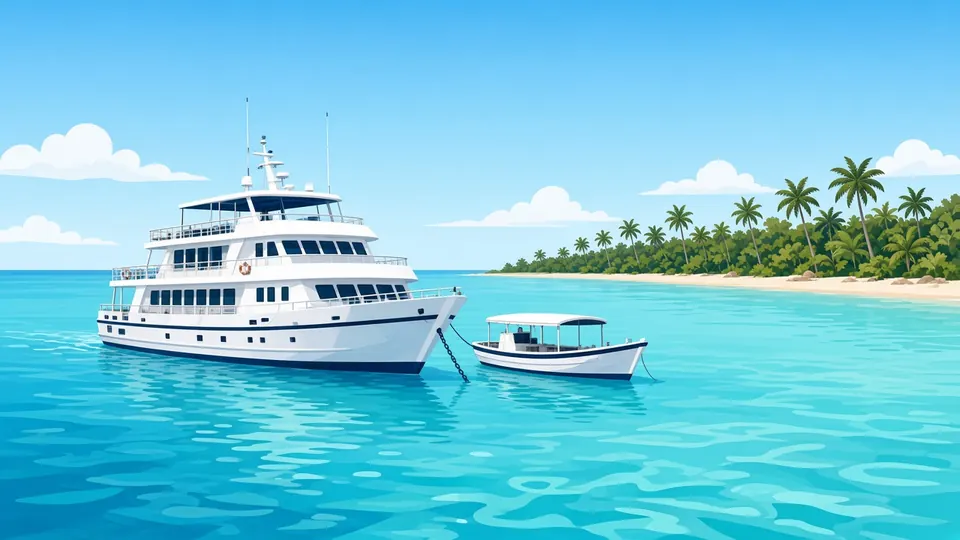
Some divers choose a liveaboard, a boat on which you sleep, eat and dive for several days. Liveaboards are popular with divers who want to visit several atolls and a wider range of dive sites in one trip. It suits divers who want to dive several times a day and reach more remote areas.
A liveaboard is a very different holiday from a resort stay. Resorts suit couples and families where not everyone dives, while liveaboards are built entirely around diving.
Booking tips
- Tell us you dive when you enquire, and share your level and what you hope to see. We'll suggest hand-picked resorts with dive centres and reefs that suit you.
- Ask the resort in advance about courses, try-dives, Nitrox and children's programmes, so they can plan for you.
- Do online theory before you travel if you are taking a course.
- Plan your last dive with your flight in mind. The dive centre will tell you how long to wait before flying.
- Mention your diving when you check in, so the dive team can meet you early in your stay.
Quick checklist
- Certification card and logbook, paper or digital
- Your own mask and dive computer, if you have them
- Online course theory done before you travel, if taking a course
- Tell the resort about your experience and any courses you want
- Ask about a refresher dive if you haven't dived recently
- Listen carefully to every briefing
- Plan your last dive around your flight home
Frequently asked questions
Can I try diving if I have never dived before?
Yes. Many resort dive centres offer try-dives for complete beginners, starting in shallow water with an instructor beside you.
Do I need to bring my own dive equipment?
No. Dive centres usually rent all the equipment you need. Many divers like to bring their own mask and dive computer.
Which certification agencies are used in the Maldives?
PADI and SSI are the best-known. If you trained with another agency, ask the dive centre before you travel.
Can I learn to dive during my holiday?
Yes. Many dive centres offer the Open Water course, and you can often do the theory online before you travel.
Can children dive in the Maldives?
Many dive centres have programmes for children above a minimum age. Ask the resort about age limits and what they offer.
What is a refresher dive?
A short session with an instructor to review the basics if you haven't dived for a while. The dive centre will tell you if you need one.