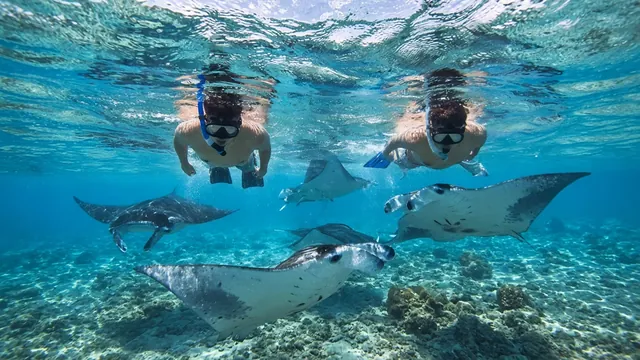
Swimming beside a manta ray or a whale shark is one of the great wildlife moments in the Maldives. Both are gentle filter feeders. They eat tiny plankton, not people, and they live wild in the open ocean.
This guide explains where they are usually seen, how encounters work, the rules that protect them, and why no one can promise a sighting.
Meet the animals
Manta rays
Manta rays are large, graceful rays that glide through the water like wide, dark wings.
Mantas visit cleaning stations, coral spots where small fish pick parasites off their skin. They also gather to feed where currents bring plankton together.
Whale sharks
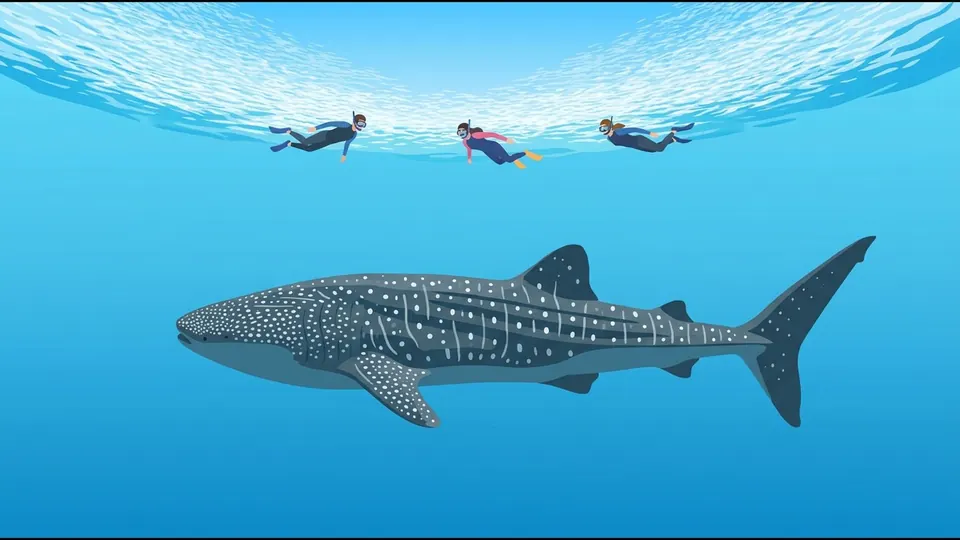
The whale shark is the largest fish in the sea. Despite its size and the word "shark", it is slow and gentle, and feeds by filtering plankton and small fish from the water.
Where they are seen
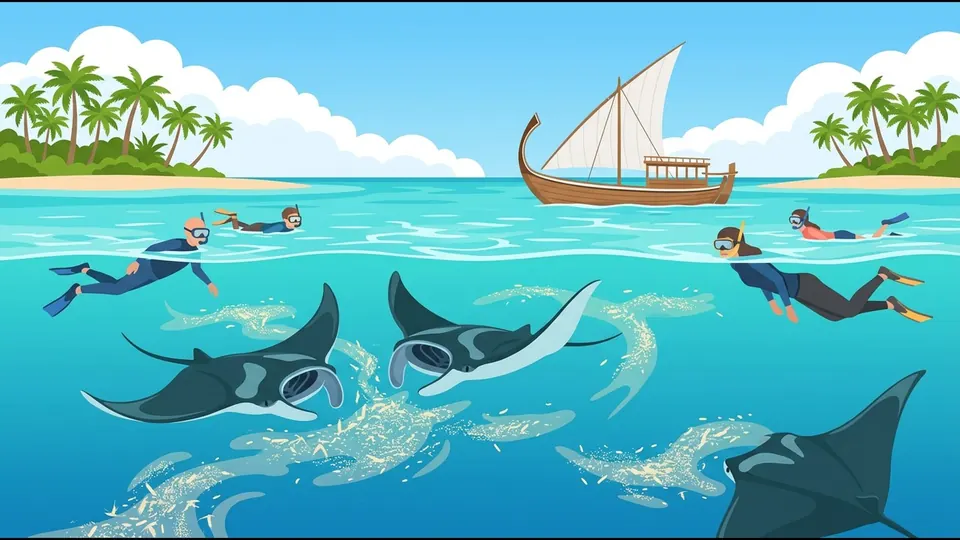
Both species move with currents and food, so they can appear in many places. A few areas are especially well known.
Hanifaru Bay
Hanifaru, a small protected bay in Baa Atoll's UNESCO Biosphere Reserve, is the best known place to see manta rays feeding in large numbers, sometimes joined by whale sharks. It is snorkelling only, with strict limits on visits. Our Hanifaru Bay guide explains the rules and how visits work.
South Ari Marine Protected Area
The outer reef along the south of Ari Atoll is known for sightings of whale sharks, which can be seen there at different times of year. The area is a Marine Protected Area, with rules for boats and swimmers to protect the animals.
Cleaning stations and channels
Manta rays are also seen at cleaning stations and channels in many atolls. Dive and snorkel teams at resorts know the local sites and when they are worth visiting.
Not guaranteed
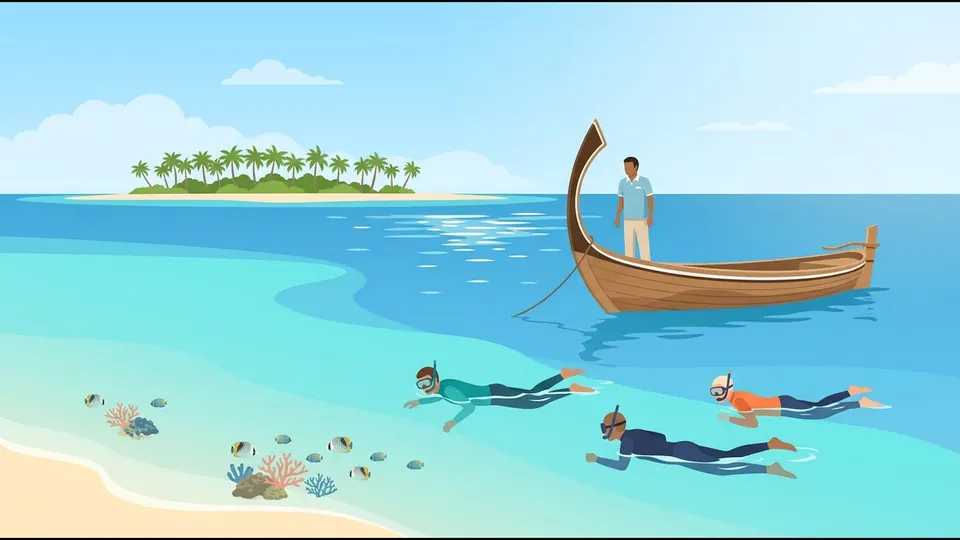
These are wild animals, and sightings are never guaranteed. Plankton, currents, weather and the animals' own movements all play a part. Some trips see many, some see none.
Treat any encounter as a privilege, not a booking. Staying several nights and keeping a flexible plan gives you more chances.
How encounters usually work
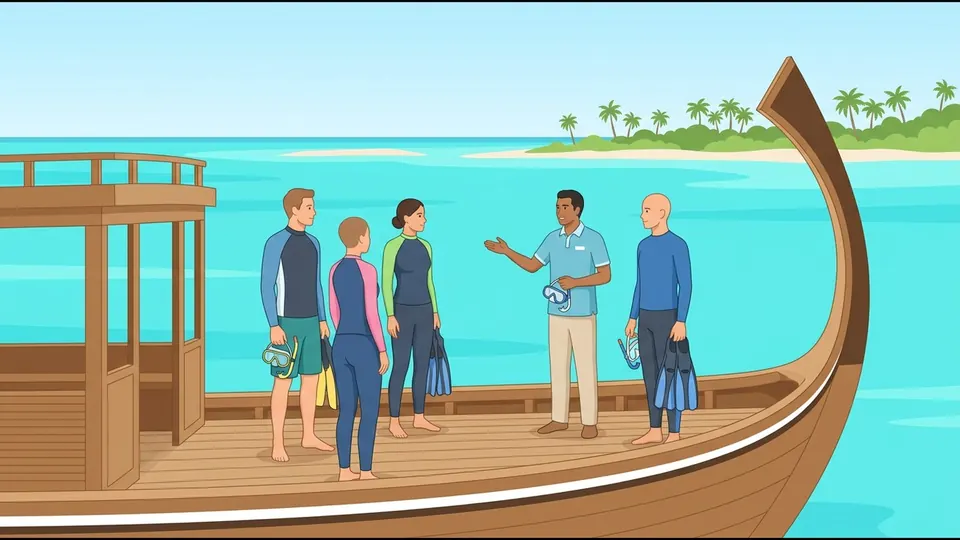
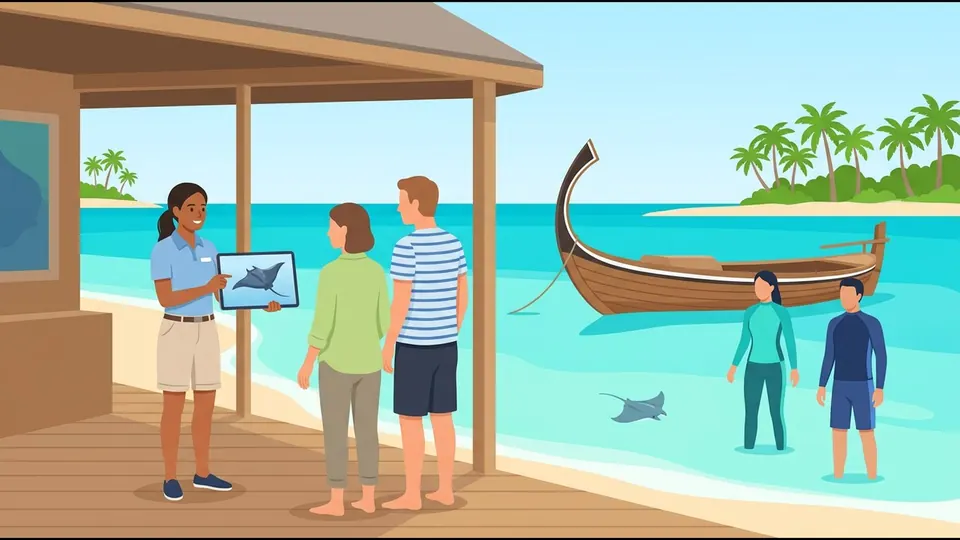
Most guests see mantas and whale sharks on a guided trip from their resort.
- Snorkelling trips take guests by boat to the area, where guides look for the animals.
- Dive trips visit manta cleaning stations and other sites, for certified divers.
- Marine biologists at some resorts give talks and join trips, explaining what you see.
Your guide will give a briefing before you enter the water. Listen closely, and ask questions if anything is unclear. Swimming ability, comfort in open water and any health conditions should be discussed with the resort team before booking.
Responsible encounter rules
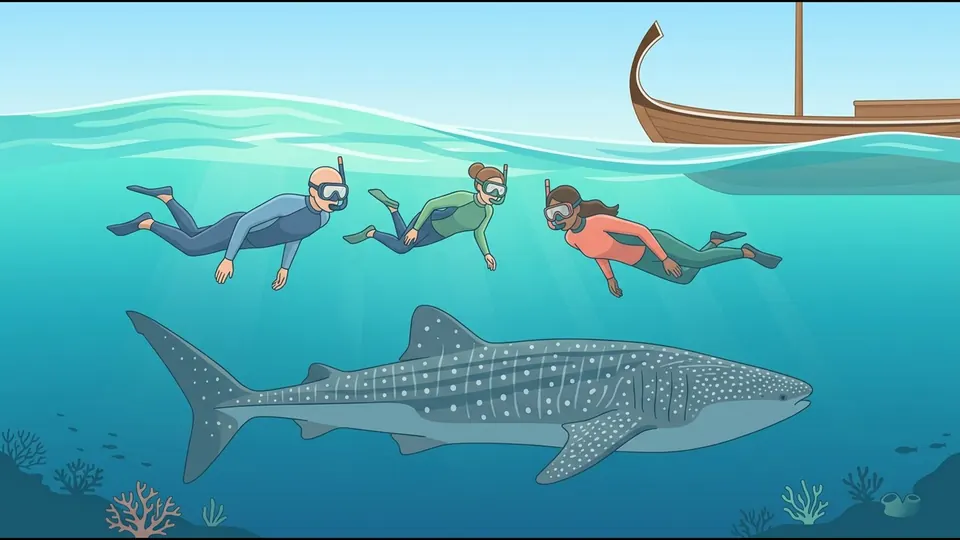
The Maldives protects both species, and the protected areas have their own regulations. The basics are simple and help keep the animals coming back.
- Keep your distance. Protected-area rules set minimum distances from the animals, especially from a whale shark's tail. Your guide will explain them.
- Never touch or try to ride any animal.
- Do not chase. Let the animal choose its path, and never block it or swim in front of it.
- No flash photography.
- Enter the water quietly, without splashing or diving down on top of the animal.
- Limit numbers. Follow your guide on how many people are in the water at once.
- Follow time limits where they apply.
Boats also follow rules, such as slowing down near the animals and keeping their distance. Choosing a resort or trip that respects these rules matters.
Choosing a resort for mantas and whale sharks
If seeing these animals matters to you, tell us when you enquire. We can look for hand-picked resorts with:
- An active dive and snorkel team
- Regular manta or whale shark trips
- A marine biologist or conservation programme
- A good location for the areas you want to visit
We will always be honest that wildlife cannot be promised.
Related guides
Frequently asked questions
Can I see manta rays while snorkelling?
Often, yes. Mantas visit shallow cleaning stations and feeding areas, so many encounters happen on guided snorkel trips, and Hanifaru Bay is snorkelling only.
How does a whale shark trip usually work?
A guided boat searches the outer reef of the South Ari Marine Protected Area. When a whale shark is spotted, you enter the water to snorkel, following the briefing and keeping your distance.
Are sightings guaranteed?
No. Both are wild animals that follow plankton and currents. Sightings are never guaranteed.
Can I scuba dive at Hanifaru Bay?
No. Hanifaru is snorkelling only, with limits on boats, people and time in the water.
Are manta rays and whale sharks dangerous?
They are gentle filter feeders that eat plankton. Keep your distance and follow your guide's briefing for a safe, respectful encounter.
Can I touch a manta ray or whale shark?
No. Touching, riding or chasing the animals is not allowed. Keep your distance and never use flash.