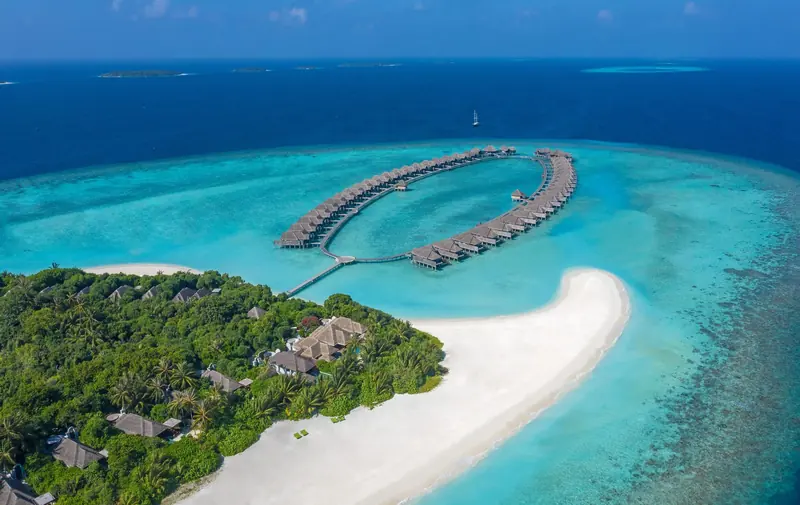
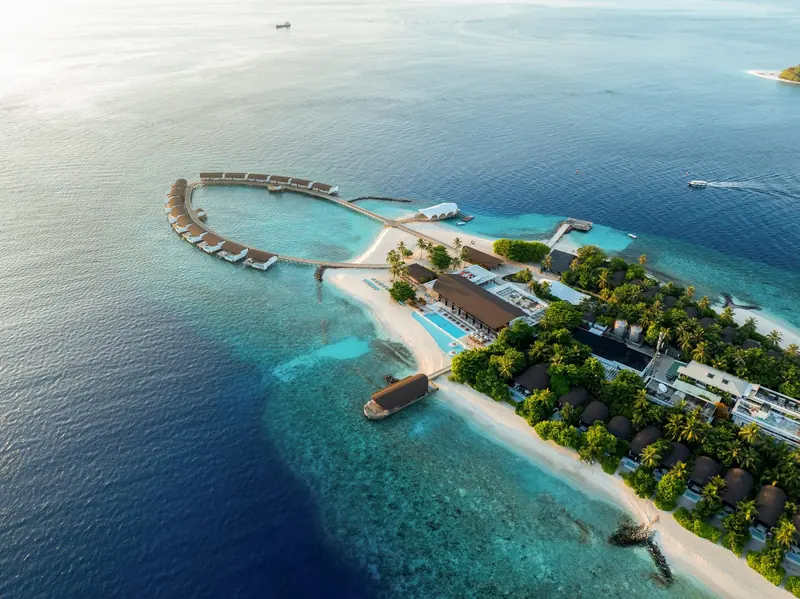
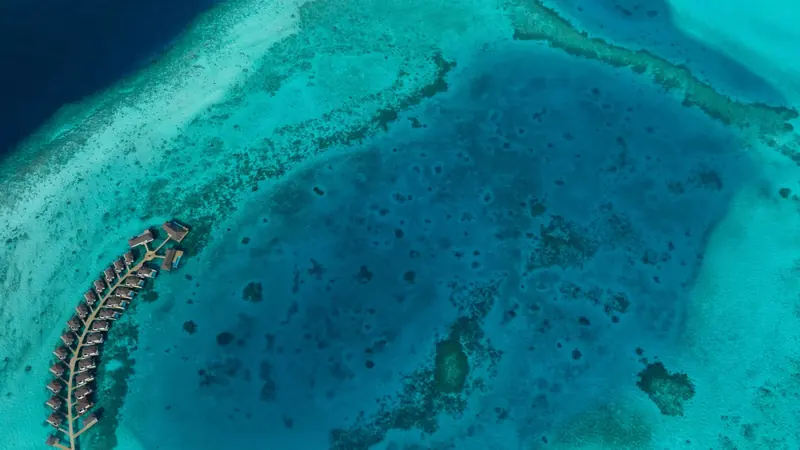
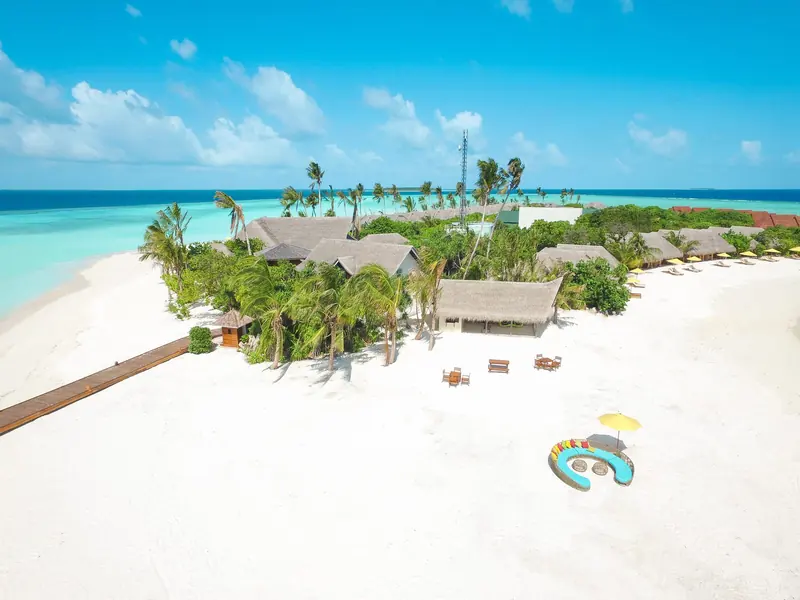
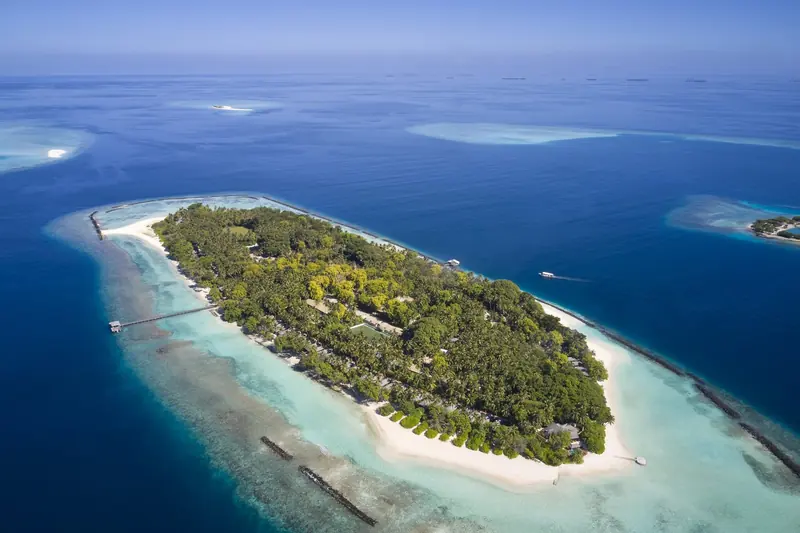
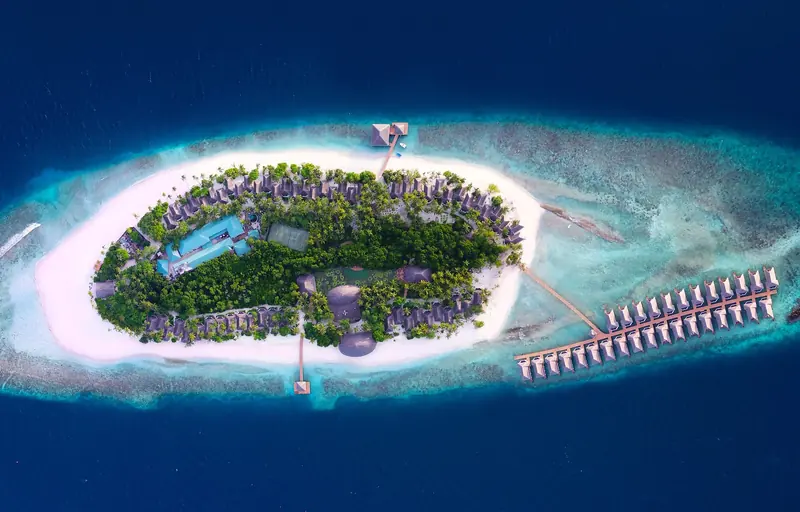
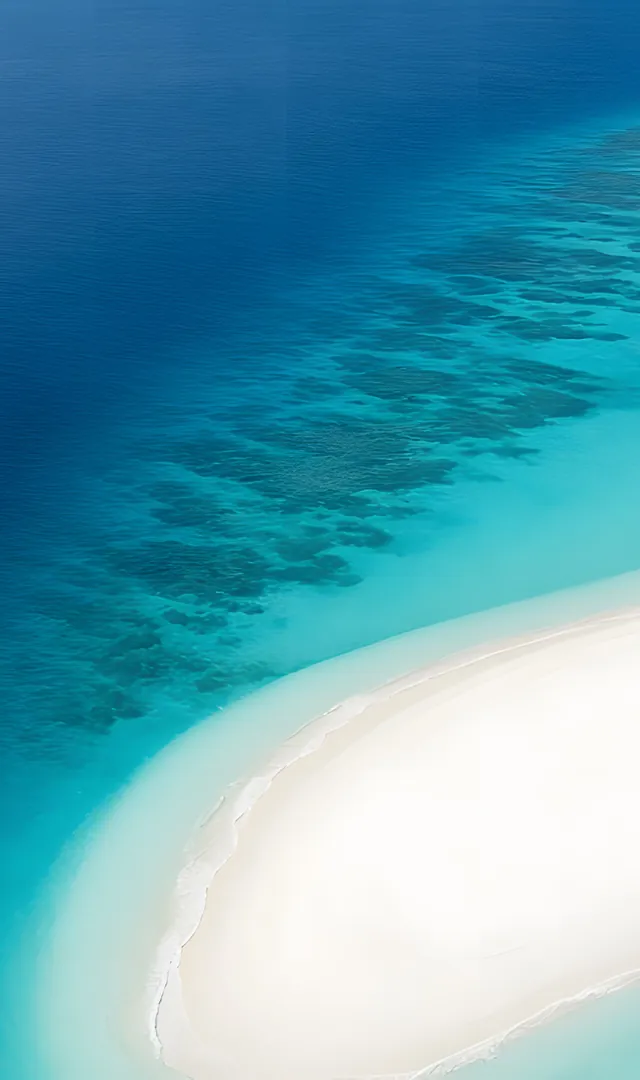
Baa Atoll, north-west of Malé, is one of the best places in the world to swim with manta rays. In 2011 UNESCO named the whole atoll a Biosphere Reserve, and its best-known protected area, Hanifaru Bay, draws large numbers of reef manta rays, and at times whale sharks, to feed during the southwest monsoon.
This guide explains what the reserve is, when to go, the rules in the bay and how resort guests usually visit.
What the Biosphere Reserve is
A UNESCO Biosphere Reserve isn't a fenced park. It's a whole region where people live, work and welcome visitors, with a few strictly protected core areas at its heart. In Baa Atoll these core areas include reefs, islands and seabird roosts, protected under Maldivian law.
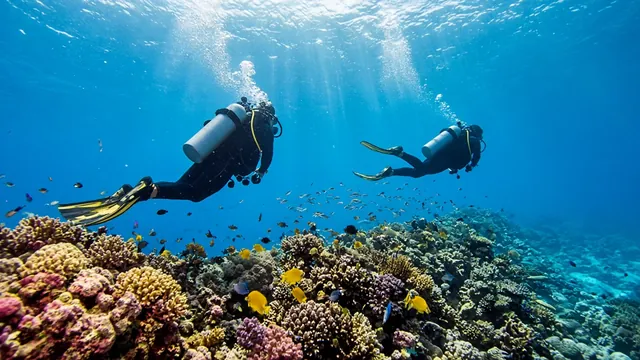
The atoll's reefs support around 250 species of coral and some 1,200 species of reef fish, along with turtles, manta rays and whale sharks. For guests, that means rich snorkelling and diving across the atoll, not only in Hanifaru Bay.
Why mantas gather in Hanifaru Bay
Hanifaru is a small, shallow bay on the eastern side of Baa Atoll, protected since 2009. During the southwest monsoon, currents push plankton-rich water into the bay, where the shape of the reef traps it. Reef manta rays arrive to feed, sometimes in large numbers, and whale sharks join them on some days.
When the plankton is dense, mantas may feed in a group, swimming in tight loops near the surface. It's one of the reasons divers and snorkellers from around the world come to Baa Atoll.
When to go
| Period | What to expect |
|---|---|
| May to November | Manta season in Hanifaru Bay, during the southwest monsoon |
| Roughly June to October | The most reliable months for larger gatherings; July to September is usually the busiest |
| Around new and full moon | Stronger tides often concentrate the plankton |
| December to April | Hanifaru is usually quiet; mantas are more often seen at other sites |
Wildlife never runs to a timetable. Even in peak months some days are quiet, so it helps to stay several nights and keep your plans flexible. Our guide to the best time to visit explains the monsoons in more detail.
The rules in the bay
Hanifaru Bay is managed by the Baa Atoll Biosphere Reserve Office, and visits follow strict rules:
- Snorkelling only. Scuba diving is not allowed in the bay.
- Guided visits with a permit. Every group goes in with a certified guide, and each visitor needs an access permit, which your resort or operator usually arranges.
- Limited time and numbers. Time in the water is capped, as are the number of boats and swimmers in the bay at once. Access may be closed at certain times, and when the bay is full or the current is strong.
- Keep your distance. Stay at least 3 metres from manta rays and 4 metres from whale sharks. Never touch, chase or block them.
- No flash, no drones. Flash photography and drones aren't allowed.
Rangers patrol the bay, and the rules can change. Your guide will brief you before you get in.
How to visit responsibly
- Listen to your guide. Enter the water quietly and stay with your group.
- Stay at the surface. Let the mantas come to you, and give feeding animals plenty of room.
- Use reef-safe habits. Wear a rash vest rather than lots of sunscreen, and never stand on or touch coral.
- Be a confident swimmer. Currents can be strong, so a life jacket or float is wise if you're unsure.
- Choose responsible operators. Visitor fees support conservation work in Baa Atoll.
How resort guests get there
Most visitors stay at a resort in or near Baa Atoll and join a guided trip by boat, often at short notice, when the guides see mantas in the bay. Some resorts also offer manta snorkelling or diving at other Baa Atoll sites.
Baa Atoll is reached by seaplane from Malé, or by domestic flight to Dharavandhoo followed by a short boat ride. Our transfers guide compares the options.
Hanifaru excursions vary by resort, and some depend on the season and on how busy the bay is. Tell us that the mantas are a priority, and we'll check what each resort offers for your dates, from Anantara Kihavah Villas to The Westin Maldives Miriandhoo Resort.
Frequently asked questions
Can you scuba dive in Hanifaru Bay?
No. Hanifaru Bay is snorkelling only. Divers can see mantas at other Baa Atoll sites, which your resort's dive centre can suggest.
When is the best time to see mantas in Hanifaru Bay?
The season runs from about May to November. Larger gatherings are most likely from about June to October, often around the new and full moon, but sightings are never guaranteed.
Do I need a permit to visit Hanifaru Bay?
Yes. Every visitor needs an access permit and must go with a certified guide. Resorts and licensed operators usually arrange both.
Are children allowed to visit Hanifaru Bay?
Confident young swimmers can usually join, but currents can be strong. Resorts set their own age and swimming rules, so ask before you book.
Is Baa Atoll worth visiting outside manta season?
Yes. The reefs, turtles and calm lagoons are there all year, and mantas are often seen at other sites in the atoll during the northeast monsoon.