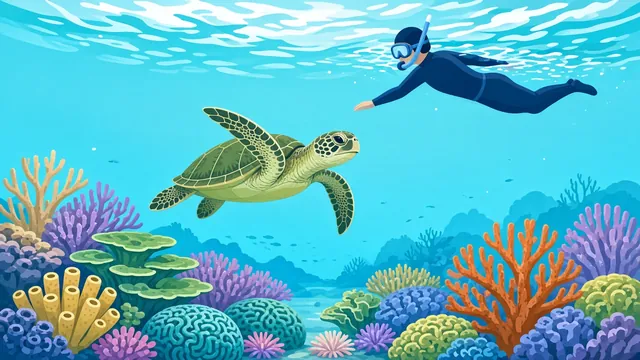
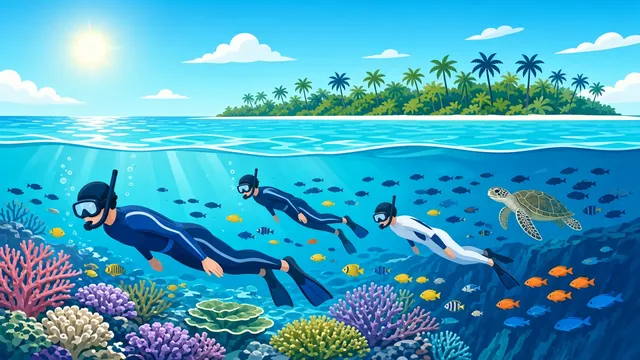
Swimming beside a sea turtle is one of the moments many guests remember most from a Maldives holiday. Turtles live on reefs across the country, and many people see them simply by snorkelling from the beach.
This guide focuses on turtles: which kinds you might meet, how to tell them apart, why they are protected and how to watch them well. For the wider picture of reef life, see our marine life guide.
Turtles of the Maldives
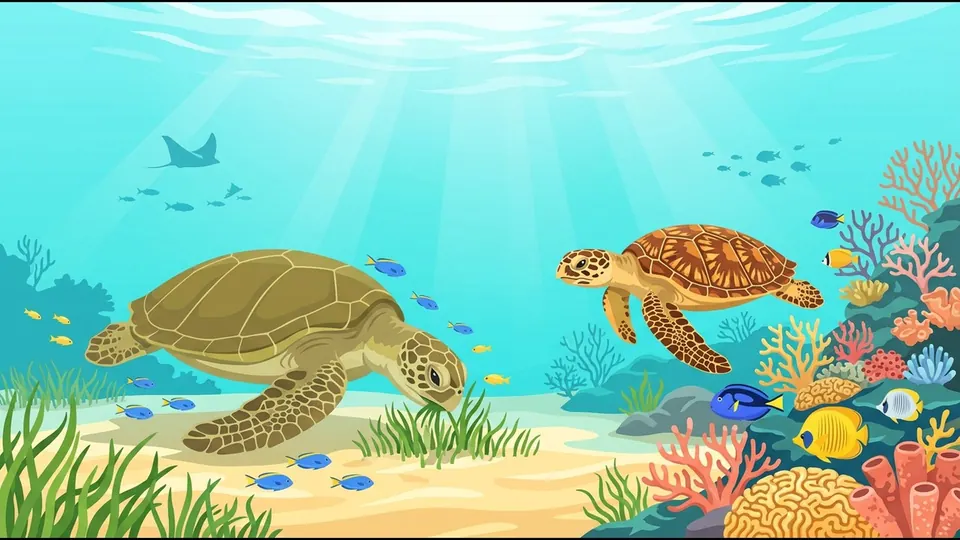
Five of the world’s seven species of sea turtle are found in Maldivian waters. Two are seen far more often than the others.
- Green turtle. A large, calm turtle that grazes on seagrass and algae. Despite its name, its shell is usually brown or olive.
- Hawksbill turtle. A smaller reef turtle that feeds on sponges in the coral. It is the one snorkellers meet most on many reefs.
The other three species, the loggerhead, olive ridley and leatherback, are rarely seen by visitors.
Telling green and hawksbill turtles apart
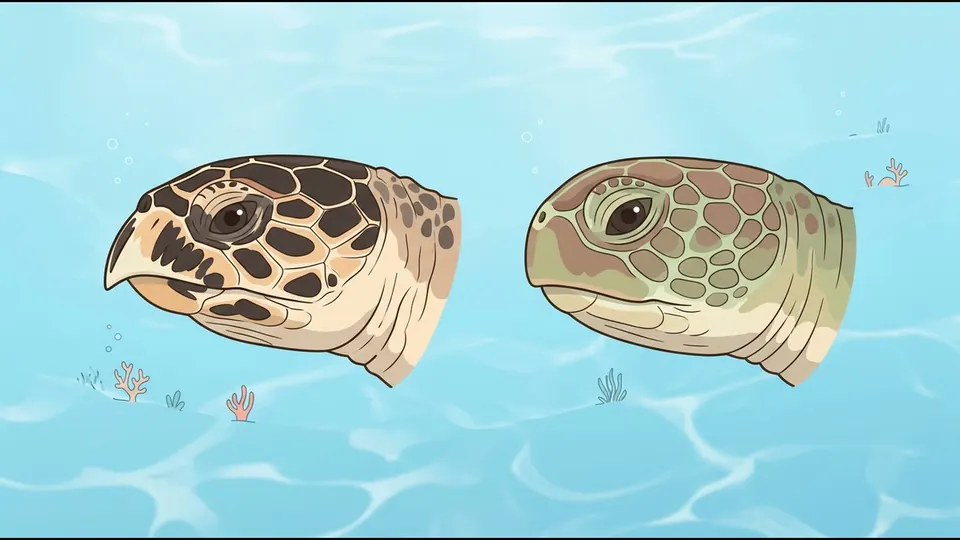
You don’t need to be an expert to tell the two common turtles apart.
- Head shape. The hawksbill has a narrow head and a pointed, hooked beak, like a bird’s. The green turtle has a short, rounded face.
- Shell. The hawksbill’s shell has overlapping plates with an edge like a saw, often in amber and brown patterns. The green turtle’s shell is smoother.
- Where it feeds. A turtle picking at the coral is likely a hawksbill. One grazing on seagrass in a sandy lagoon is likely a green turtle.
Resort marine biologists are always happy to help you identify a turtle from your photos.
Where turtles are seen
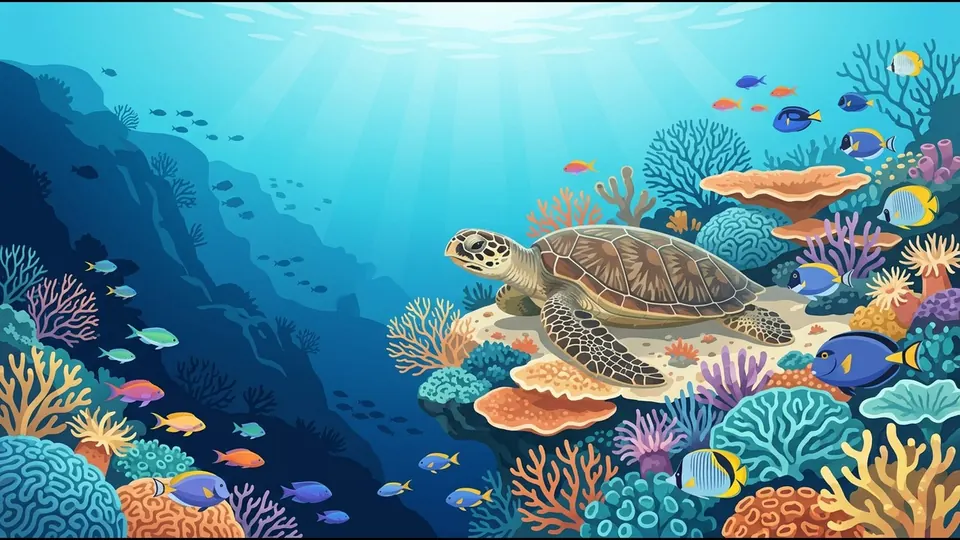
Turtles are seen across the Maldives, all year round.
- House reefs. Many resorts have turtles that are regularly seen along the reef. Our guide to house reefs explains how they work.
- Seagrass lagoons. Green turtles graze in seagrass beds in some lagoons.
- Snorkelling and dive trips. Guides know the reefs where turtles often rest.
Turtles are wild, so sightings are never guaranteed. Calm, clear days give you the best chance of a good view.
Why turtles are protected
All sea turtles are protected in the Maldives. Catching or harming them, and taking or selling their eggs, is against the law. Products made from turtle shell are banned too, so never buy anything that might be made from it. Our guide to customs rules explains what you can and can’t take home.
Turtles face threats around the world, including plastic and lost fishing nets in the sea. Some resorts work with marine teams that look after injured turtles and return them to the ocean, and some invite guests to learn about this work.
How to watch turtles respectfully
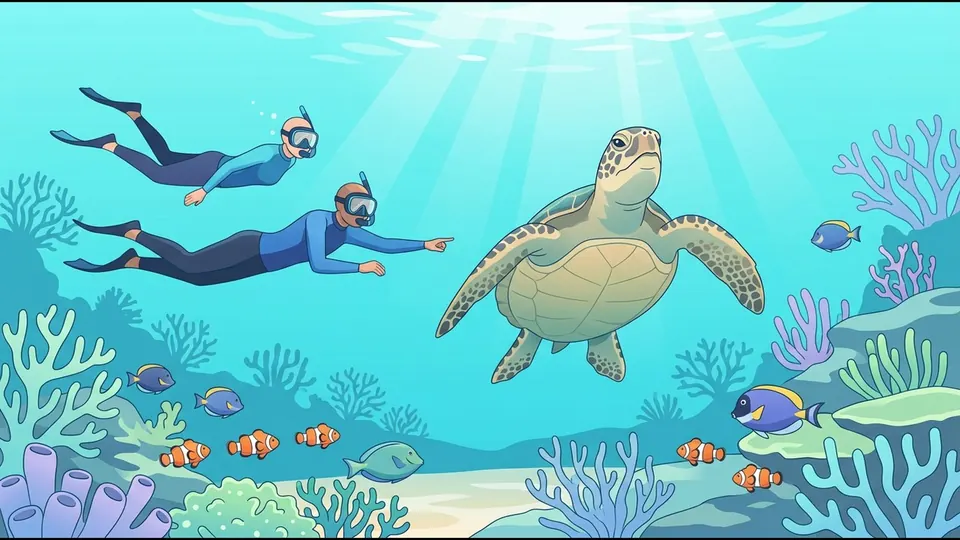
Turtles must come to the surface to breathe, and a frightened turtle wastes energy. These simple habits help.
- Keep your distance. Stay a few metres away, and don’t block the turtle’s path to the surface.
- Never touch, chase or ride a turtle.
- Don’t feed them.
- Stay calm and still. A turtle that isn’t disturbed will often carry on feeding while you watch.
- Don’t use flash when taking photos.
- Follow your guide’s briefing on every trip.
Turtles and the beach
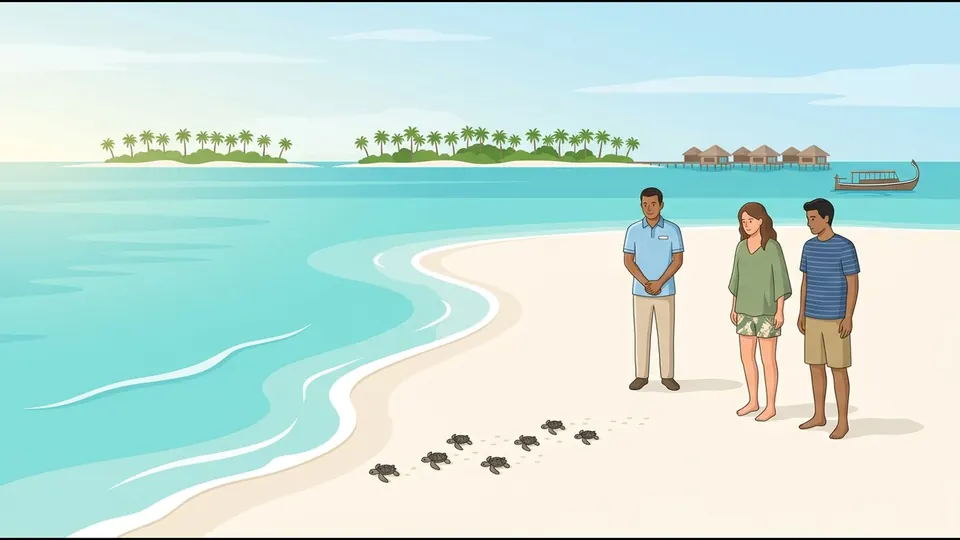
Turtles sometimes come ashore to nest on quiet beaches. If you are lucky enough to see a nesting turtle or hatchlings, keep well back, stay quiet, and don’t use torches or phone lights. Tell the resort team, who will know what to do.
Sea turtle hatchlings find the sea by moving towards the brightest horizon, so bright lights on the beach can confuse them. That is one reason many resorts keep beach lighting soft at night.
Turtle programmes at resorts
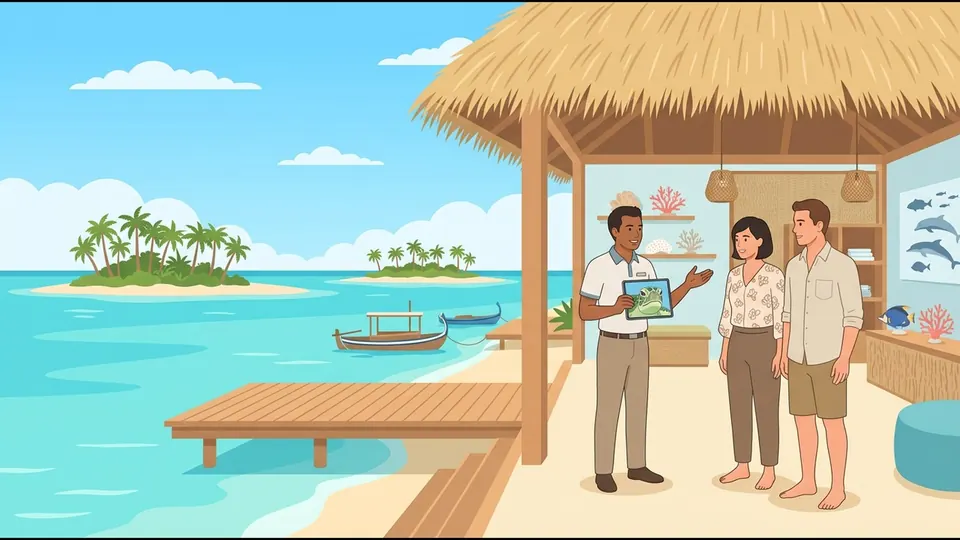
Some resorts have marine biologists or turtle programmes. These can include:
- talks about turtles and the reef
- guided snorkels to places turtles are often seen
- photo ID projects, where guests’ photos help track individual turtles by the pattern on their faces
- visits to turtle care centres
If turtles are high on your list, tell us when you enquire. We’ll suggest hand-picked resorts with easy access to good reefs, and check what turtle activities they offer.
Frequently asked questions
Can you see sea turtles in the Maldives?
Yes. Turtles are seen across the country all year round, often while snorkelling on house reefs. Sightings are never guaranteed.
Which turtles live in the Maldives?
Five species are found, but visitors mostly see green turtles and hawksbill turtles.
Can I touch a sea turtle?
No. Turtles are protected. Keep a few metres away and never touch, chase or feed them.
Are turtles protected in the Maldives?
Yes. Harming turtles or taking their eggs is against the law, and turtle shell products are banned.
How can I tell a green turtle from a hawksbill?
A hawksbill has a narrow head with a pointed, hooked beak. A green turtle has a short, rounded face.
What should I do if I see a turtle nesting?
Keep well back, stay quiet, avoid torches and phone lights, and tell the resort team.