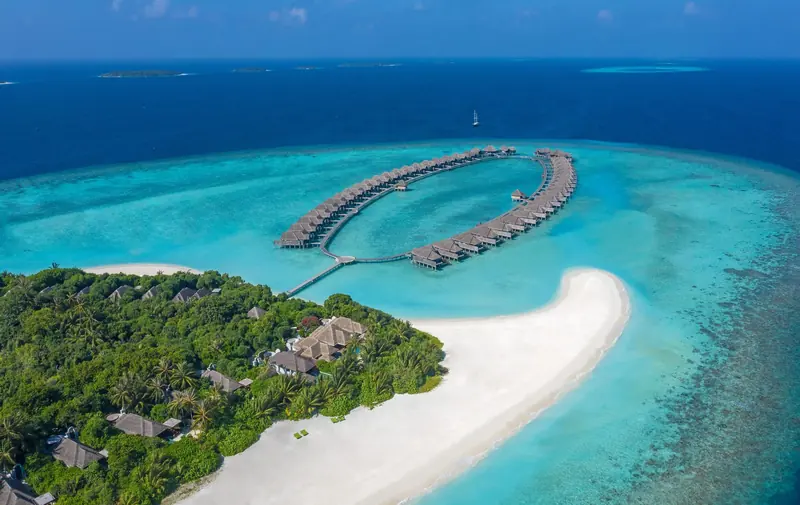
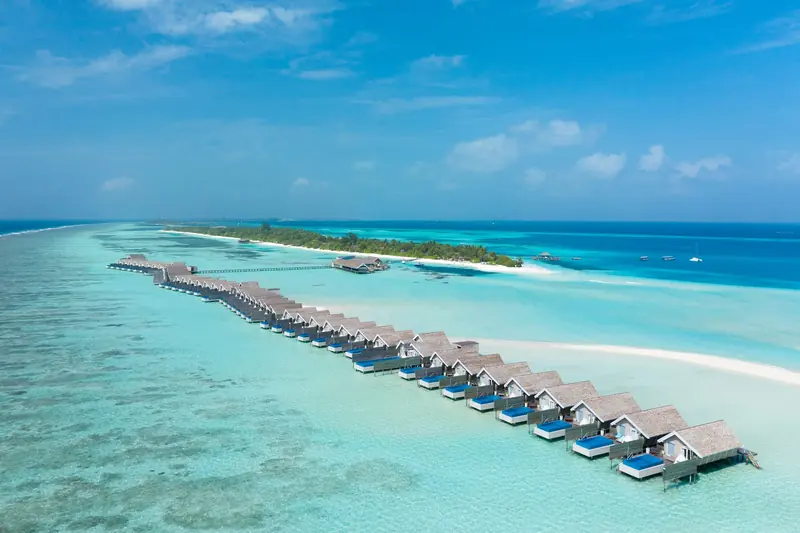
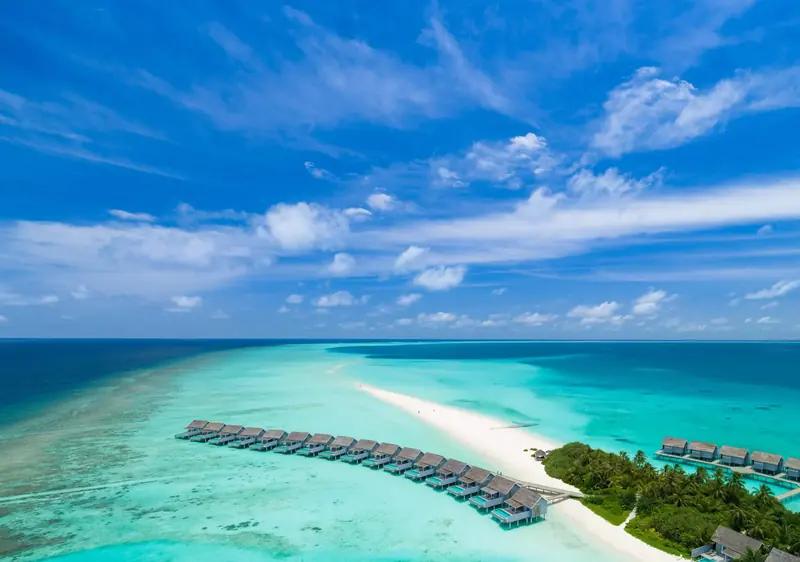
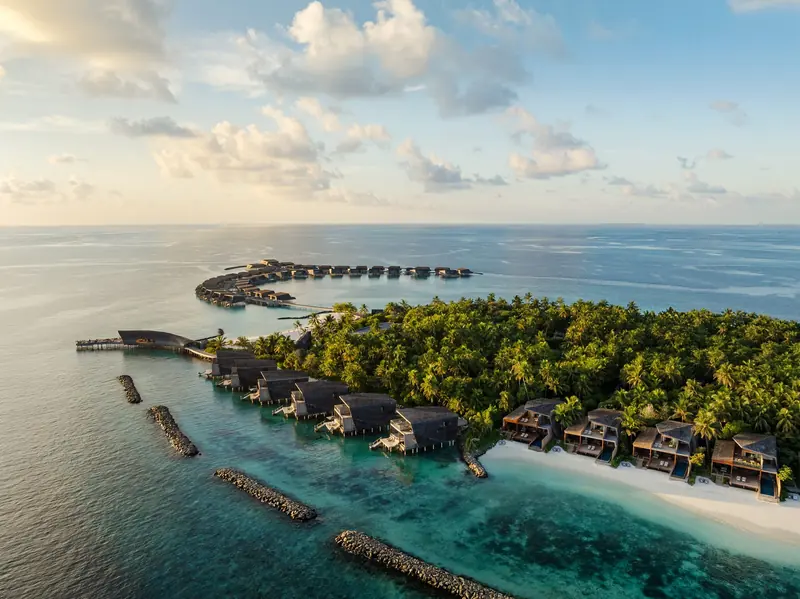
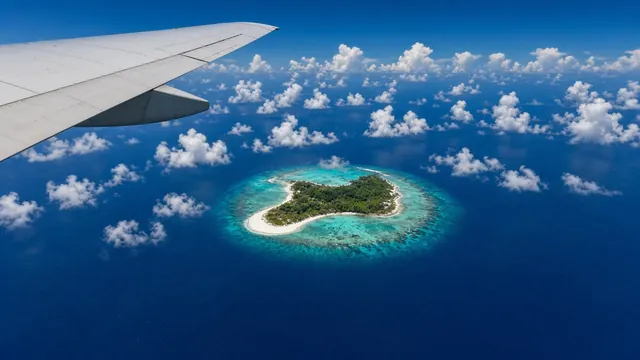
The Maldives is a chain of low coral islands in the Indian Ocean, south-west of India and Sri Lanka. For most visitors it means one island and one resort, but the country itself is much larger and more varied.
Here are the basic facts, with figures from official sources and the year they refer to.
Geography
The Maldives lies in the Indian Ocean and crosses the equator, stretching from about 7° north to just south of the equator. Its territory covers about 115,300 square kilometres including the sea, but only a tiny part of that is land. Most islands rise only a metre or two above sea level.
Atolls and islands
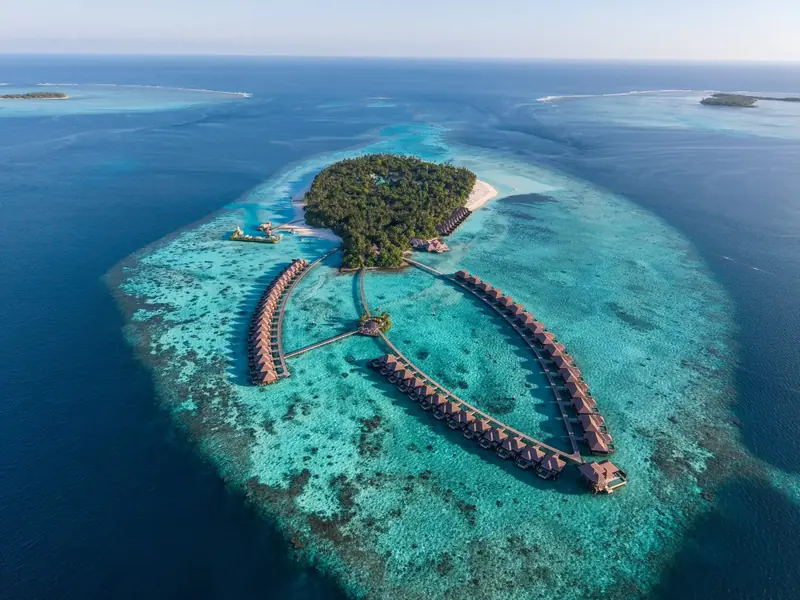
An atoll is a ring of coral reef around a lagoon, with islands along the rim. The word itself comes from Dhivehi, the language of the Maldives.
- Natural atolls. Official sources count around 26 natural atolls, though some give a lower number, depending on how smaller reef formations are classified.
- Administrative atolls. The country is divided into 20 administrative atolls, plus cities such as Malé and Addu City. Each atoll has an official name, such as Baa or Raa, as well as a traditional geographical name.
- Islands. The Maldives Bureau of Statistics counts 1,192 islands (Statistical Pocketbook 2024).
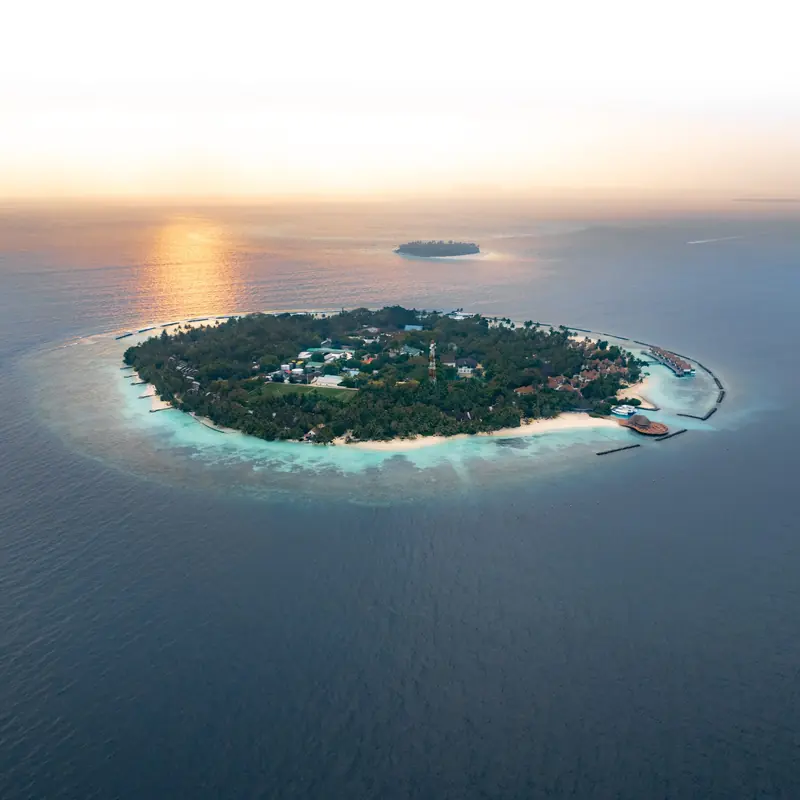
- Inhabited islands. The 2022 census counted 187 inhabited islands. Most other islands are uninhabited, or used for resorts, industry or farming.
Resorts are separate from local islands, and most resorts have an island to themselves.
Population and capital
The 2022 Population and Housing Census counted 515,132 residents, including 382,639 Maldivians and 132,493 foreign residents. About 41% of the population lives in the Malé area, which includes Hulhumalé and Villimalé.
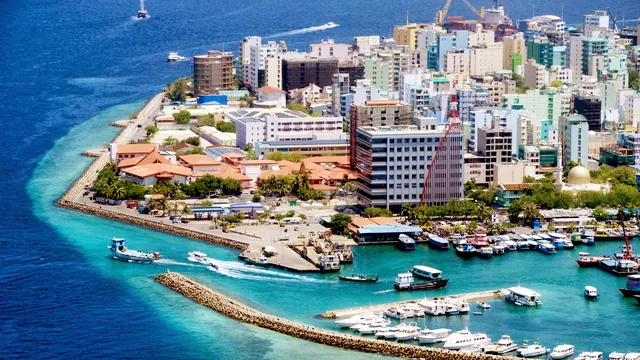
Malé, the capital, sits next to Velana International Airport and is linked to it by a bridge. Our Malé guide covers what to see there.
Money, language and religion
- Currency. The national currency is the Maldivian rufiyaa (MVR). US dollars are widely accepted at resorts, and most resorts also take major credit cards.
- Language. Dhivehi is the official language, written in the Thaana script. English is widely spoken, especially in tourism.
- Religion. Islam is the state religion, and daily life on local islands follows Islamic customs.
- Etiquette. Resorts are relaxed. In Malé and on local islands, dress modestly, covering shoulders and knees. Alcohol is served at resorts, but not on local islands.
The weekend is Friday and Saturday. During Ramadan, some services in Malé and on local islands change their hours, while resorts carry on as usual.
Time zone
Maldives time is UTC+5 all year, with no daylight saving. Some resorts set their clocks an hour ahead of Malé time, often called island time, to give guests more daylight in the evening. Check with your resort, especially before a transfer or a departure flight.
Climate
The Maldives is warm all year, with average temperatures between about 25°C and 32°C. Broadly, the northeast monsoon brings the drier season from about December to April, and the southwest monsoon brings more wind and rain from about mid-May to November. Even in the wetter months, showers often pass quickly. Our best time to visit guide explains the year month by month.
Frequently asked questions
How many islands does the Maldives have?
The Maldives Bureau of Statistics counts 1,192 islands. The 2022 census counted 187 inhabited islands.
What currency is used in the Maldives?
The Maldivian rufiyaa (MVR). US dollars are widely accepted at resorts.
What language is spoken in the Maldives?
Dhivehi is the official language. English is widely spoken, especially at resorts.
What time zone is the Maldives in?
UTC+5, with no daylight saving. Some resorts use their own island time, so check with yours.
Is there a dress code?
Resorts are relaxed. In Malé and on local islands, cover shoulders and knees and follow local customs.